

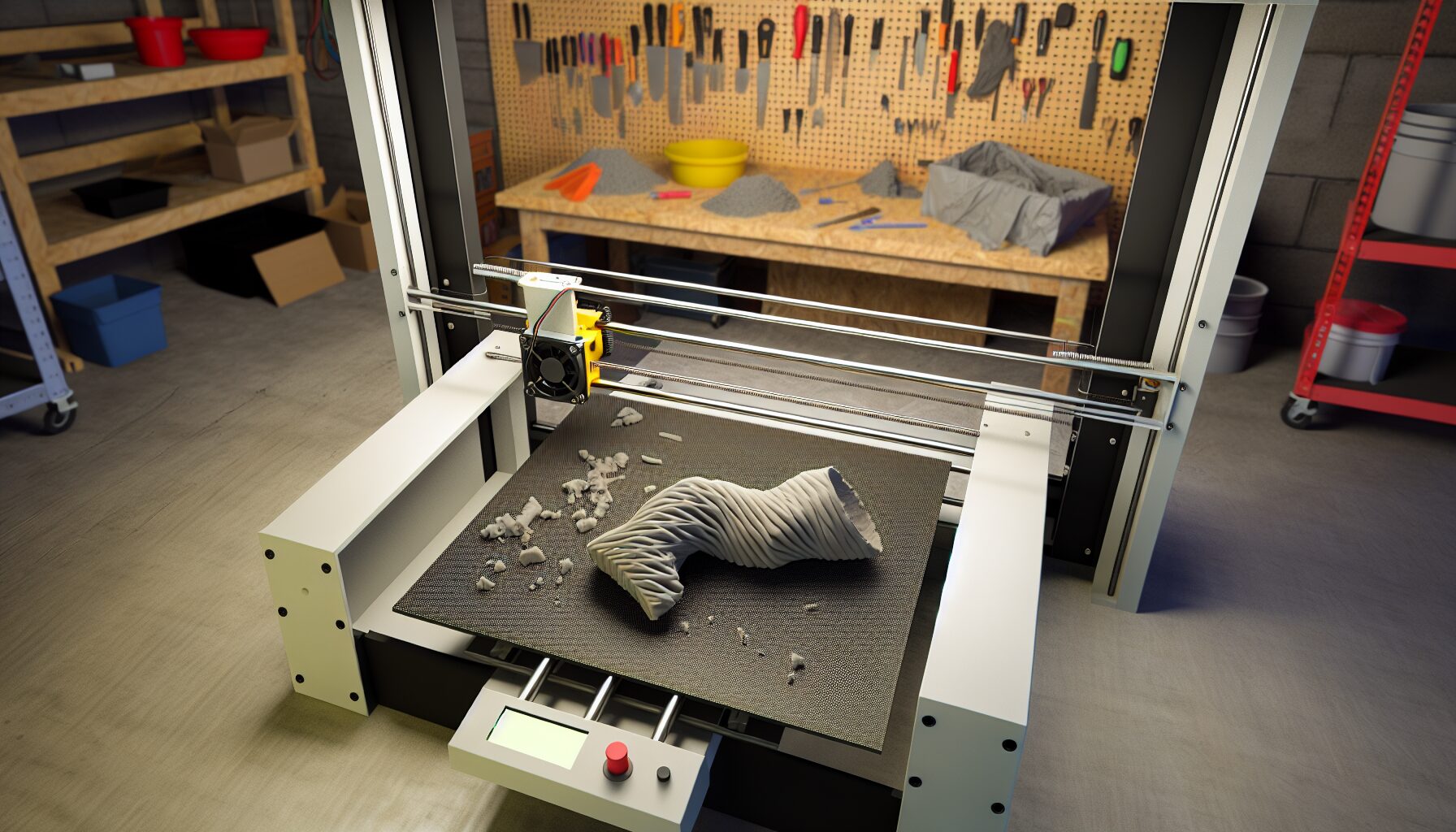
Rubber is everywhere—from car tires to gaskets to shoe soles. So, it’s no surprise that many people wonder why we can’t simply 3D print with rubber. While flexible filaments exist, true rubber remains a challenge in the world of additive manufacturing. Let’s explore the science behind this limitation and what’s being done to overcome it.
Why Rubber Isn’t 3D Printable—Yet
At first glance, rubber seems like an ideal candidate for 3D printing. It’s flexible, durable, and widely used in countless applications. However, the problem lies in the very nature of rubber itself. Most rubbers are thermoset polymers, meaning they undergo a chemical change during curing that makes them permanently solid. Unlike thermoplastics, which can be melted and reformed repeatedly, thermosets can’t be re-melted once cured.
This poses a major problem for traditional 3D printing methods like Fused Deposition Modeling (FDM), which rely on melting and extruding material layer by layer. Since rubber can’t be melted and re-solidified, it doesn’t work with these systems. Even flexible filaments like TPU (thermoplastic polyurethane) are not true rubber—they’re rubber-like, but they don’t have the same properties as vulcanized rubber.
Understanding Thermosets vs. Thermoplastics
To understand why rubber is so difficult to 3D print, it helps to know the difference between thermosets and thermoplastics. Thermoplastics, such as PLA or ABS, soften when heated and harden when cooled. This reversible process makes them ideal for 3D printing. Thermosets, on the other hand, undergo a one-time chemical reaction—often involving heat or UV light—that permanently sets their shape.
Rubber is typically vulcanized, a process that uses sulfur and heat to create cross-links between polymer chains. This gives rubber its elasticity and strength, but also makes it impossible to re-melt. Once vulcanized, rubber can’t be reshaped, which is why it can’t be used in standard 3D printing processes.
Current Workarounds and Alternatives
While true rubber isn’t 3D printable, there are several workarounds. Flexible filaments like TPU, TPE (thermoplastic elastomer), and soft PLA offer rubber-like properties and are compatible with FDM printers. These materials are widely used for making phone cases, gaskets, and other flexible parts. However, they don’t match the performance of real rubber in terms of elasticity, chemical resistance, and durability.
Another approach involves using resin-based 3D printing methods like SLA (stereolithography) or DLP (digital light processing). Some resins can be formulated to mimic rubber-like properties, and they cure using UV light rather than heat. However, these materials still fall short of true rubber in many applications.
There’s also research into 3D printing with liquid silicone rubber (LSR), which is a type of thermoset. Specialized printers can mix and cure LSR during the printing process, but these systems are expensive and not widely available. Companies like ACEO (a division of Wacker Chemie) have developed commercial LSR 3D printing solutions, but they’re primarily used in industrial settings.
The Future of Rubber 3D Printing
Despite the challenges, researchers and companies are actively working on ways to bring true rubber into the 3D printing world. One promising area is reactive extrusion, where two or more components are mixed and cured during the printing process. This could allow for in-situ vulcanization, enabling the creation of real rubber parts layer by layer.
Another avenue is the development of new printable elastomers that combine the best of both worlds—thermoplastic processability with thermoset performance. Advances in material science, such as dynamic covalent bonds and self-healing polymers, could pave the way for printable rubbers in the future.
Until then, designers and engineers will have to rely on rubber-like materials or post-processing techniques to achieve the desired properties. While we’re not quite there yet, the gap between rubber and 3D printing is slowly closing.
Source: Hackaday

