

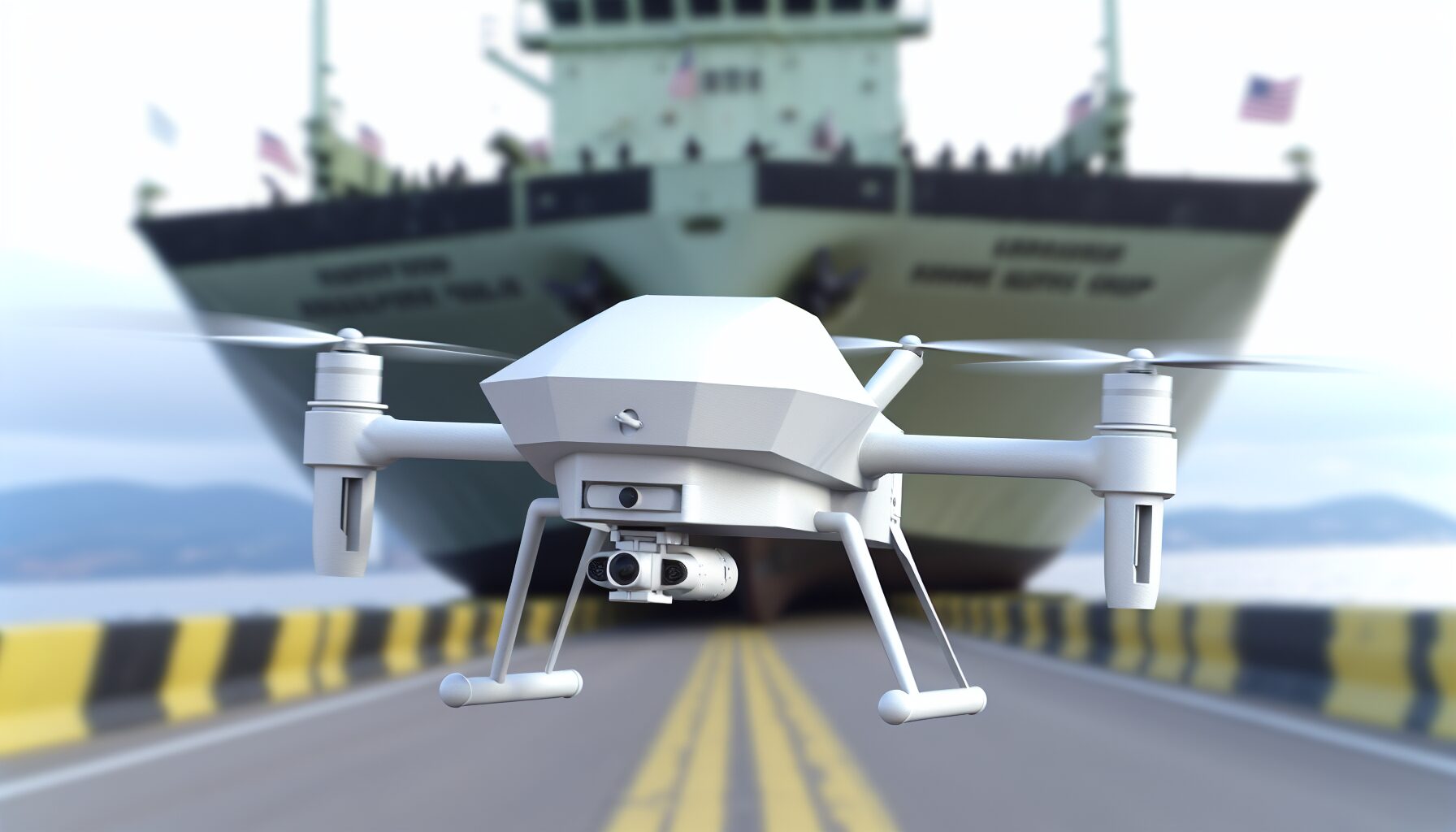
In a groundbreaking demonstration of battlefield innovation, the U.S. Marine Corps has successfully 3D printed and deployed a functional reconnaissance drone directly in the field. This achievement highlights the growing role of additive manufacturing in modern military operations, offering rapid prototyping and on-demand production capabilities in remote or austere environments.
3D Printing in the Field: A Tactical Advantage
The 2nd Marine Logistics Group (2nd MLG), based at Camp Lejeune, North Carolina, recently showcased their ability to fabricate and launch a small unmanned aerial system (sUAS) using 3D printing technology. The drone, designed for reconnaissance missions, was produced using a field-deployable additive manufacturing setup, allowing Marines to create mission-specific tools and equipment without relying on traditional supply chains.
This initiative is part of the Marine Corps’ broader push to integrate advanced manufacturing into its logistics and operational strategies. By leveraging 3D printing, units can reduce downtime, increase self-sufficiency, and adapt quickly to evolving mission requirements.
Design and Capabilities of the 3D Printed Drone
The drone, known as the ‘Scout’, was designed in collaboration with the Marine Corps Systems Command and the Naval Air Systems Command. It features a modular design that allows for rapid assembly and customization. The Scout is equipped with a camera system for real-time surveillance and can be launched by hand, making it ideal for reconnaissance in contested or hard-to-reach areas.
According to the Marines, the entire process—from printing to flight—can be completed in less than 24 hours. The drone’s components are printed using durable polymer materials, and its electronics are integrated post-printing. This approach not only reduces logistical burdens but also enables rapid iteration and field-based innovation.
Expanding the Role of Additive Manufacturing in the Military
The successful deployment of the Scout drone is just one example of how additive manufacturing is transforming military logistics. The Marine Corps has been investing in 3D printing for several years, with applications ranging from vehicle parts and medical devices to tools and weapons components.
In 2016, the Marines established the Advanced Manufacturing Operations Cell (AMOC) to coordinate and expand the use of 3D printing across the service. Since then, the AMOC has supported numerous field exercises and real-world missions, demonstrating the versatility and value of additive manufacturing in expeditionary settings.
Other branches of the U.S. military are also exploring similar technologies. The Army, Navy, and Air Force have all launched initiatives to integrate 3D printing into their maintenance and supply operations. These efforts aim to enhance readiness, reduce costs, and improve the resilience of military forces in the face of supply chain disruptions.
Future Applications and Strategic Impact
The implications of field-based 3D printing extend far beyond drones. In the future, Marines could print everything from replacement parts for vehicles to custom medical implants, all tailored to the specific needs of a mission. This capability could prove especially valuable in remote or contested environments where traditional resupply is difficult or impossible.
Moreover, the ability to rapidly prototype and test new designs in the field could accelerate innovation and give U.S. forces a strategic edge. As adversaries develop new technologies and tactics, the flexibility offered by additive manufacturing could enable faster adaptation and response.
While challenges remain—such as ensuring the reliability and durability of printed components—the Marine Corps’ successful deployment of a 3D printed drone marks a significant milestone. It demonstrates not only the technical feasibility of field-based manufacturing but also its potential to reshape how the military approaches logistics, maintenance, and innovation.
As the technology matures, we can expect to see even more ambitious applications of 3D printing in defense, from autonomous systems to entire infrastructure components. For now, the Scout drone stands as a powerful symbol of what’s possible when cutting-edge technology meets battlefield necessity.
Source: marines.mil

