

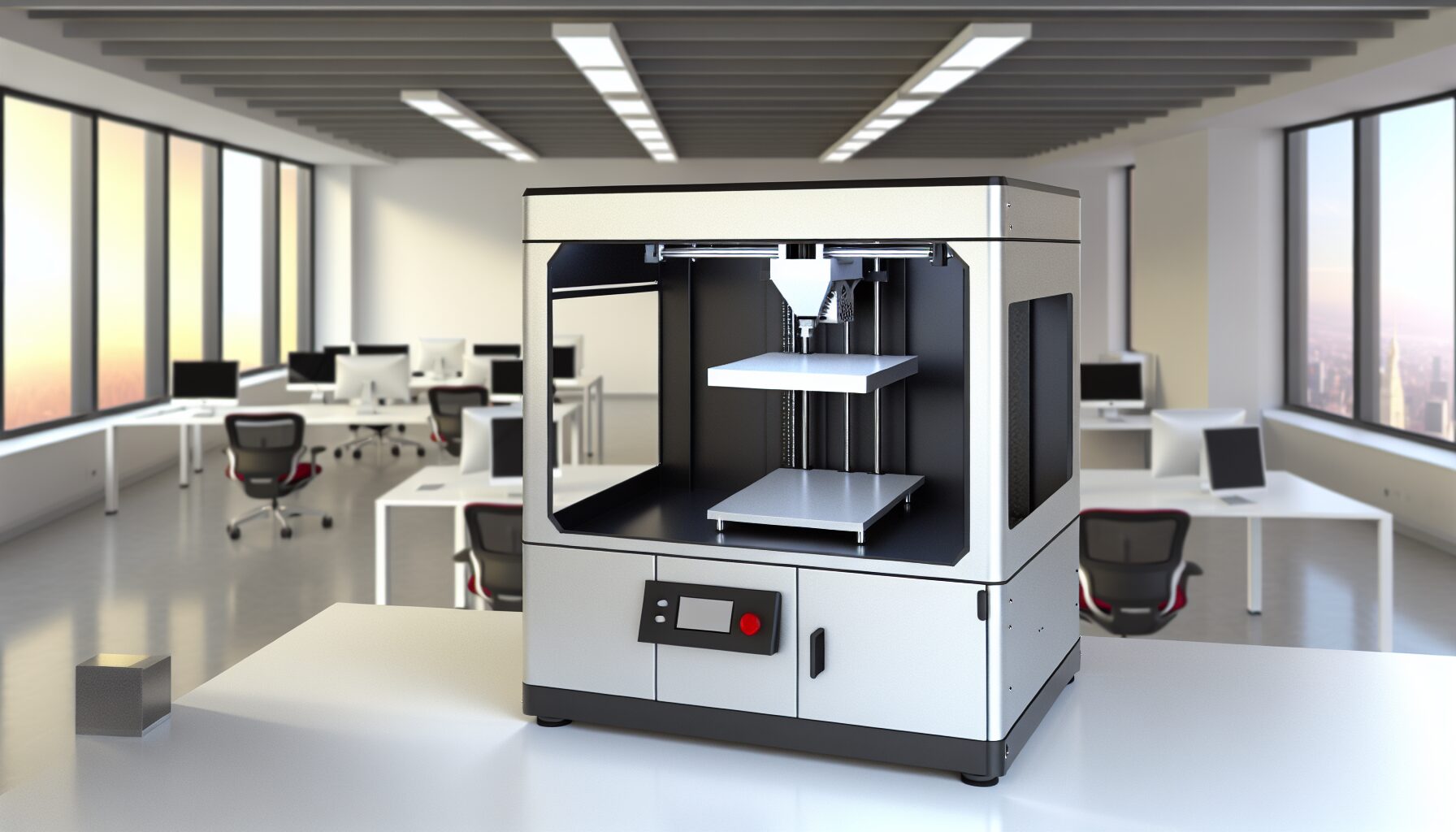
Metal 3D printing has long been associated with industrial settings, requiring specialized equipment, safety protocols, and dedicated space. But a new innovation from Inkbit is changing that narrative. The company has introduced a metal 3D printer that uses a unique metal ‘ink’ instead of traditional powder, making it significantly safer and more accessible—even for office environments.
Inkbit’s Breakthrough in Metal 3D Printing
Inkbit, a Massachusetts-based startup known for its Vision-Controlled Jetting (VCJ) technology, has unveiled a new metal 3D printing system that eliminates the need for hazardous metal powders. Instead, the printer uses a paste-like metal ink that is jetted onto the build platform. This approach not only reduces the risks associated with powder handling but also simplifies the printing process.
The system is based on the company’s existing VCJ platform, which uses real-time machine vision to monitor and correct each layer during the printing process. This ensures high precision and repeatability, even for complex geometries. The new metal printer builds on this foundation, offering a cleaner and more user-friendly alternative to traditional metal additive manufacturing systems.
How the Metal Ink Technology Works
Unlike powder bed fusion or binder jetting, Inkbit’s system uses a metal-filled photopolymer ink. The ink is deposited layer by layer using inkjet-style printheads. After printing, the part undergoes a debinding and sintering process to remove the polymer binder and fuse the metal particles into a dense, solid object.
This method offers several advantages:
- Safety: No loose metal powders means reduced fire and inhalation risks.
- Cleanliness: The process is cleaner and more suitable for office or lab environments.
- Precision: VCJ technology ensures high dimensional accuracy and surface quality.
- Material Flexibility: The system can potentially support a wide range of metal inks.
Currently, the printer supports stainless steel, but Inkbit plans to expand its material portfolio in the near future.
Applications and Market Potential
Inkbit’s metal 3D printer is aimed at industries that require rapid prototyping and low-volume production of metal parts without the overhead of traditional metal AM systems. This includes sectors like aerospace, medical devices, automotive, and consumer electronics.
Because the system is safer and easier to operate, it opens the door for engineers and designers to bring metal 3D printing in-house, accelerating product development cycles and reducing reliance on external service providers.
Moreover, the office-friendly nature of the printer could make it a game-changer for research institutions and small-to-medium enterprises (SMEs) that previously found metal AM inaccessible due to cost and complexity.
Inkbit’s Vision for the Future
Founded in 2017 as a spinout from MIT, Inkbit has been focused on making additive manufacturing smarter and more accessible. Its VCJ platform has already been used for polymer printing, and the move into metals represents a significant expansion of its capabilities.
According to Inkbit, the new metal printer is currently in the beta testing phase with select partners. The company has not yet announced a commercial release date or pricing, but it is expected to be competitive with other entry-level metal AM systems.
As the demand for flexible, safe, and precise metal 3D printing grows, Inkbit’s innovative approach could help democratize access to this powerful technology—bringing it out of the factory and into the office.
Source: All3DP

