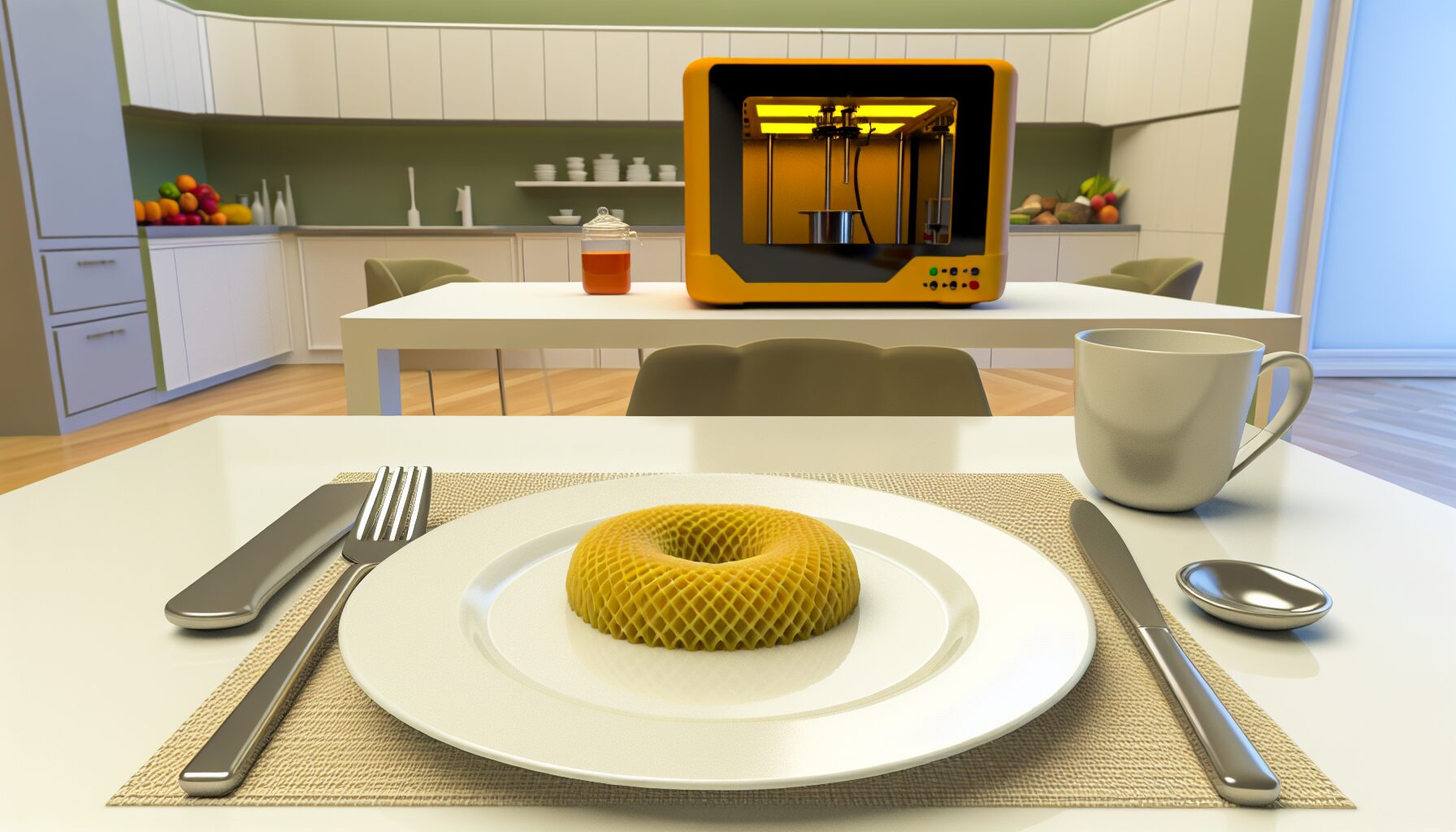
As 3D printing continues to revolutionize industries from aerospace to healthcare, researchers are now turning their attention to the culinary world. A recent study has explored how consumers respond to a novel 3D printable food, shedding light on the potential of additive manufacturing in reshaping how we produce and consume meals.
3D Printed Food: A New Frontier in Additive Manufacturing
3D printed food is not a futuristic fantasy—it’s a growing field that combines food science, digital design, and additive manufacturing. Using edible pastes, purees, or powders, 3D food printers can create intricate shapes and textures that are difficult or impossible to achieve with traditional cooking methods. This technology opens the door to personalized nutrition, reduced food waste, and innovative culinary experiences.
In the study, researchers from the University of Ottawa and the University of Saskatchewan developed a 3D printable food product using pulse flour—a high-protein, high-fiber flour made from legumes like lentils and chickpeas. The goal was to assess how consumers perceive the appearance, texture, and overall appeal of this new food format.
Understanding Consumer Perception of 3D Printed Foods
The research team conducted a series of focus groups and surveys to evaluate consumer reactions. Participants were shown samples of the 3D printed pulse-based food and asked to provide feedback on its visual appeal, perceived taste, and willingness to try or purchase the product.
Initial reactions were mixed. While some participants were intrigued by the novelty and potential health benefits, others expressed skepticism about the texture and unfamiliar appearance. However, when informed about the nutritional value and environmental benefits of using pulses and 3D printing, many participants became more open to the idea.
One key finding was that consumer education plays a crucial role in acceptance. When participants understood the purpose behind the technology—such as reducing food waste, improving nutrition, and enabling customized meals—they were more likely to view the product positively.
Applications and Benefits of 3D Printed Food
3D printed food has a wide range of potential applications. In healthcare, it can be used to create meals tailored to individual dietary needs, such as for patients with dysphagia (difficulty swallowing) or specific nutrient requirements. In space exploration, NASA has explored 3D printing as a way to provide astronauts with nutritious, long-lasting meals during extended missions.
In the consumer market, 3D food printing could enable personalized nutrition plans, where meals are designed based on a person’s health data, preferences, and dietary restrictions. It also offers chefs and food designers a new medium for culinary creativity, allowing for intricate designs and textures that enhance the dining experience.
Moreover, using ingredients like pulse flour supports sustainability. Pulses are nitrogen-fixing crops that require less water and fertilizer than many other crops, making them an environmentally friendly choice. Combining this with the precision of 3D printing could lead to more efficient food production with less waste.
Challenges and the Road Ahead
Despite its promise, 3D printed food faces several challenges before it can become mainstream. These include consumer skepticism, regulatory hurdles, and the need for more affordable and user-friendly 3D food printers. Texture and taste also remain critical factors—consumers are unlikely to adopt a product that doesn’t meet their sensory expectations, no matter how sustainable or nutritious it may be.
To address these issues, researchers emphasize the importance of interdisciplinary collaboration between food scientists, engineers, designers, and marketers. By improving the sensory qualities of 3D printed foods and effectively communicating their benefits, the industry can build consumer trust and interest.
As the technology matures, we may see 3D printed food become a staple in specialized settings like hospitals, elder care facilities, and even home kitchens. With growing interest in personalized nutrition and sustainable food systems, 3D food printing could play a key role in the future of how we eat.
Source: 3D Printing Industry