

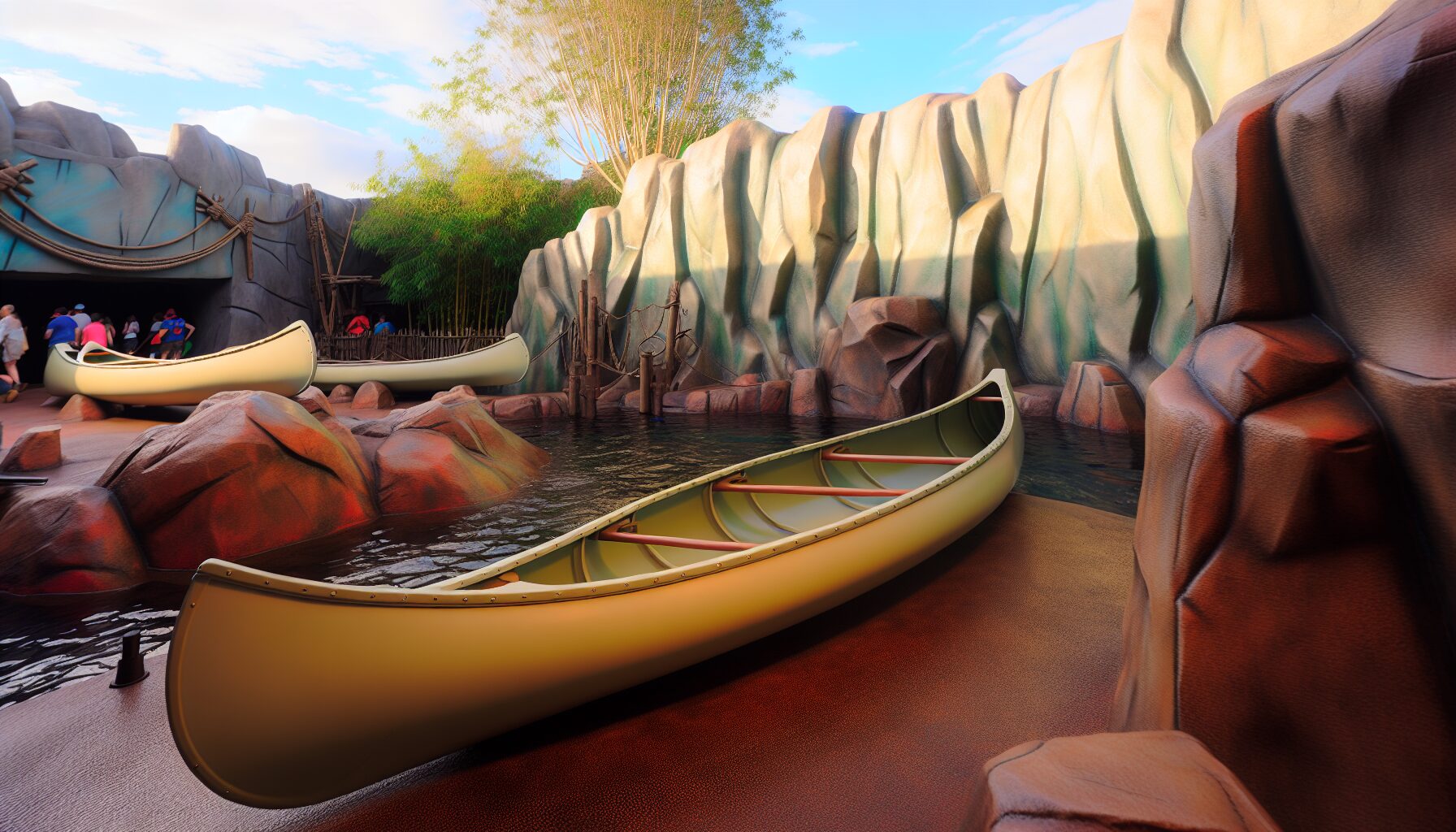
Disney is taking a bold step into the future of theme park design by testing a 3D-printed polymer canoe for its iconic Jungle Cruise ride. This move could mark the beginning of a broader shift toward additive manufacturing in the creation of ride components and props across Disney parks.
3D Printing in Theme Park Design
Traditionally, theme park props and ride vehicles are handcrafted using fiberglass, wood, and metal. These methods, while effective, are time-consuming and labor-intensive. Disney’s recent experiment with a 3D-printed polymer canoe represents a significant departure from these conventional techniques. The canoe, which was showcased at the Additive Manufacturing Users Group (AMUG) 2024 conference, was created using a large-format polymer 3D printer and is designed to be a functional, full-scale prop for the Jungle Cruise attraction.
According to Disney, the canoe was printed in multiple sections and then assembled, sanded, and painted to match the aesthetic of the ride. The result is a durable, lightweight structure that mimics the look and feel of traditional materials while offering the benefits of faster production and easier customization.
Why Additive Manufacturing Makes Sense for Disney
There are several compelling reasons why Disney is exploring 3D printing for its theme parks. First, additive manufacturing allows for rapid prototyping and iteration. Designers can quickly test new ideas, make adjustments, and produce final parts without the need for expensive molds or tooling. This flexibility is especially valuable in the fast-paced world of theme park development, where attractions are constantly being updated and refreshed.
Second, 3D printing can reduce material waste and lower production costs. By building objects layer by layer, additive manufacturing uses only the material needed for the part, minimizing scrap. This aligns with Disney’s broader sustainability goals and could help the company reduce its environmental footprint.
Finally, 3D printing opens the door to new design possibilities. Complex geometries that would be difficult or impossible to create with traditional methods can be easily produced with additive manufacturing. This could lead to more immersive and visually stunning attractions in the future.
Technical Details of the Jungle Cruise Canoe
The 3D-printed canoe was produced using a large-format polymer extrusion system, likely similar to those used in industrial applications. The material used is a high-strength thermoplastic polymer, chosen for its durability, weather resistance, and ease of post-processing. The canoe was printed in several large sections, which were then bonded together using industrial adhesives and reinforced with internal supports.
After assembly, the canoe underwent extensive finishing work, including sanding, priming, and painting. The final product is nearly indistinguishable from traditional fiberglass props, both in appearance and performance. Disney engineers also conducted structural testing to ensure the canoe could withstand the rigors of daily use in a theme park environment.
Future Applications of 3D Printing at Disney Parks
While the Jungle Cruise canoe is currently a prototype, it represents a proof of concept for broader adoption of 3D printing in Disney’s theme parks. In the future, we could see entire ride vehicles, animatronic shells, and architectural elements produced using additive manufacturing. This would not only speed up the development process but also allow for greater creativity and customization in attraction design.
Disney has already used 3D printing in other areas, such as creating detailed character models and costumes for films and merchandise. Extending this technology to theme park infrastructure is a natural next step. As 3D printing technology continues to evolve, it’s likely that we’ll see even more innovative applications in the world of themed entertainment.
For now, the Jungle Cruise canoe serves as a fascinating glimpse into the future of theme park design—one where digital fabrication and creative storytelling go hand in hand.
Source: CNET

