

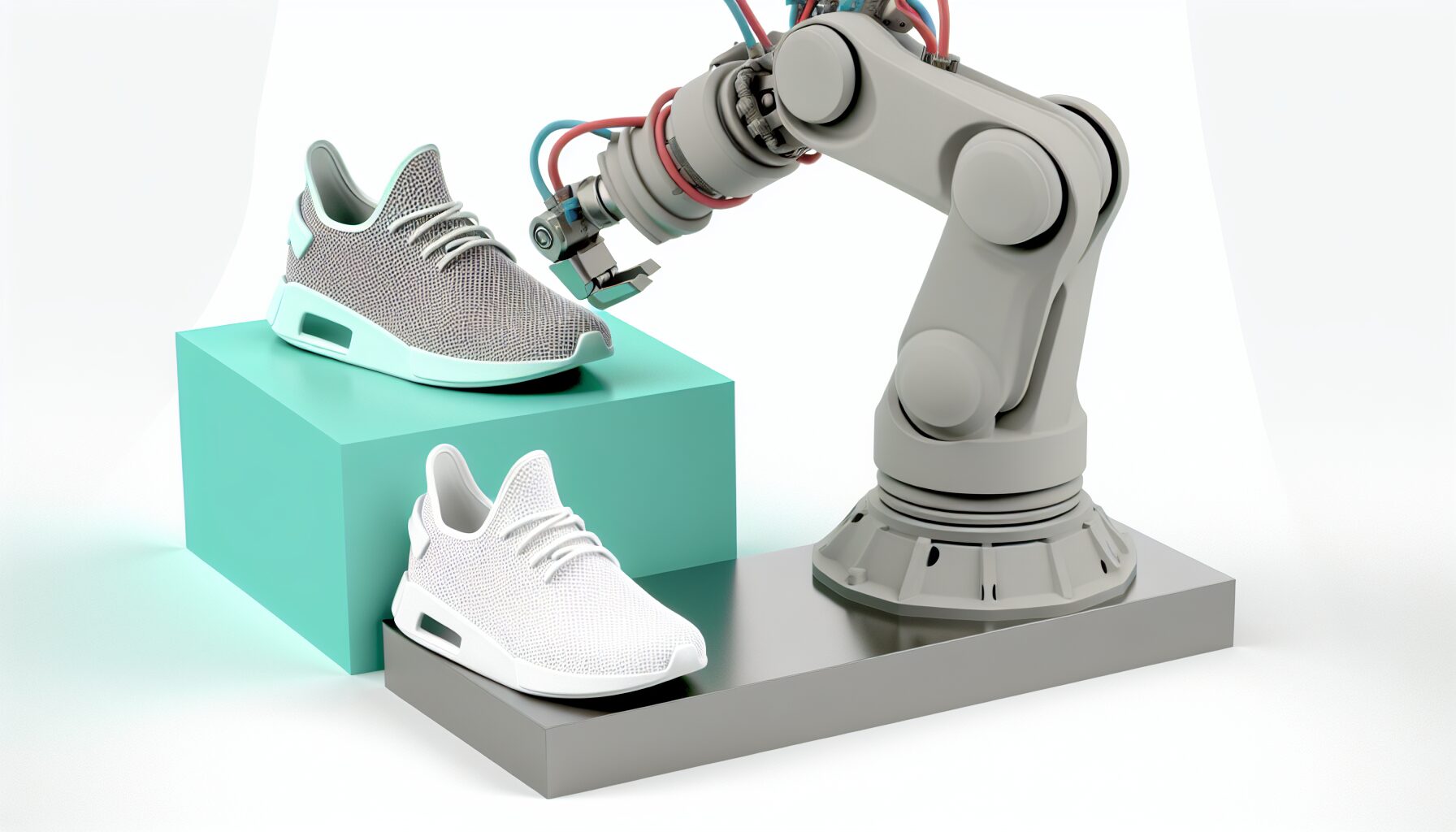
3D printing continues to reshape the manufacturing landscape, and one Chinese startup is taking it to the next level. IN3D, based in Shenzhen, is making waves by scaling its additive manufacturing capabilities from consumer products like sneakers to complex industrial applications such as robotic components.
From Footwear to Factory Floors: IN3D’s 3D Printing Journey
Founded in 2020, IN3D began its journey by producing custom 3D-printed sneakers. These shoes, made using Fused Deposition Modeling (FDM) technology, quickly gained attention for their unique design and comfort. The startup’s proprietary 3D printing system allowed for rapid prototyping and on-demand production, reducing waste and inventory costs.
But IN3D didn’t stop at fashion. Recognizing the broader potential of its technology, the company began exploring applications in industrial manufacturing. Today, IN3D’s printers are capable of producing parts for robots, drones, and even automotive components. This transition marks a significant leap in the scalability and versatility of FDM-based 3D printing.
Advanced FDM Technology at the Core
IN3D’s success lies in its refinement of FDM, one of the most accessible and widely used 3D printing technologies. Unlike traditional FDM printers, which are often limited in size and material compatibility, IN3D’s systems are designed for high-volume, high-precision output. The company has developed proprietary software and hardware that enable multi-material printing, improved layer adhesion, and faster print speeds.
These advancements allow IN3D to produce large-format parts with complex geometries, making the technology suitable for industrial use. For example, the company has partnered with robotics firms to print lightweight yet durable robotic arms and chassis components. The ability to customize parts on demand also reduces lead times and supports localized manufacturing.
Applications Across Industries
IN3D’s technology is now being adopted across a range of sectors. In the fashion industry, the company continues to produce custom footwear and accessories, offering consumers personalized products with minimal environmental impact. In the robotics and automation space, IN3D’s printers are used to fabricate structural components, enclosures, and even end-effectors.
The automotive industry is another area of growth. IN3D is working with electric vehicle startups to produce lightweight interior parts and functional prototypes. The company’s ability to print with engineering-grade thermoplastics makes it a valuable partner for rapid development cycles.
Additionally, IN3D is exploring applications in healthcare, such as custom orthotics and prosthetics. The precision and adaptability of its printing systems make them ideal for producing patient-specific medical devices.
Scaling Up: Challenges and Future Plans
While IN3D has made impressive strides, scaling 3D printing for industrial use comes with challenges. Material consistency, print reliability, and post-processing requirements remain key hurdles. To address these, IN3D is investing in R&D and expanding its team of engineers and material scientists.
The company is also building a network of distributed manufacturing hubs across China, allowing it to offer localized production services. This approach not only reduces shipping costs and carbon emissions but also enables faster turnaround times for clients.
Looking ahead, IN3D plans to enter international markets and license its technology to manufacturers abroad. The startup is also developing AI-driven design tools to further streamline the customization and production process.
As 3D printing continues to evolve, IN3D stands out as a pioneer in bridging the gap between consumer products and industrial manufacturing. Its journey from sneakers to robots exemplifies the transformative power of additive manufacturing.
Source: South China Morning Post

