

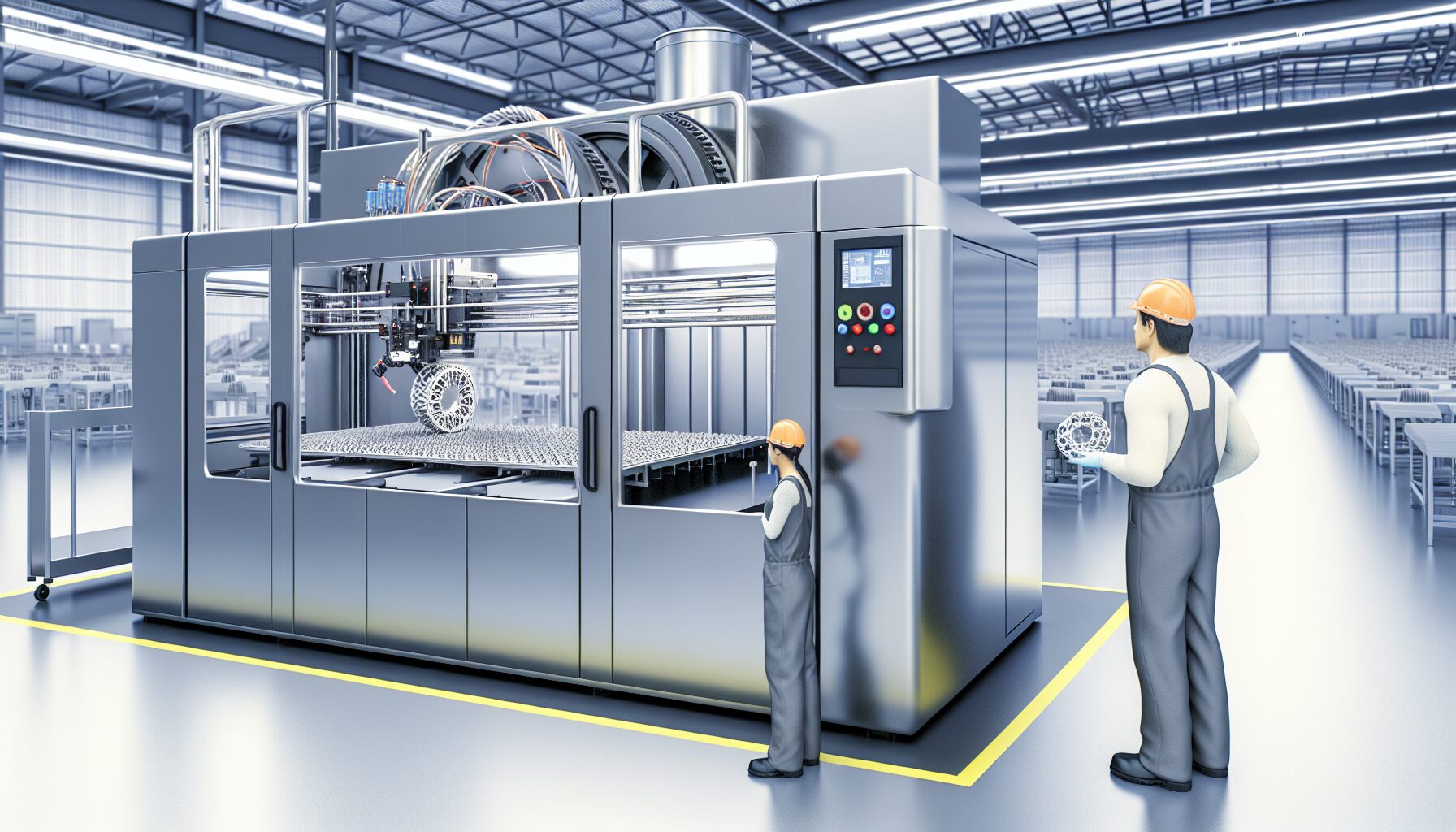
As 3D printing continues to revolutionize manufacturing, China is emerging as a global leader in the field—leaving the United States and other nations scrambling to keep pace. With massive government investment, a growing industrial base, and a clear strategic vision, China is setting the pace in additive manufacturing. But is it too late for the U.S. to catch up?
China’s Strategic Investment in 3D Printing Technology
China’s dominance in 3D printing didn’t happen overnight. Over the past decade, the Chinese government has made additive manufacturing a national priority. Through its “Made in China 2025” initiative, the country has poured billions into advanced manufacturing technologies, including 3D printing. This has led to the rapid development of domestic 3D printer manufacturers, materials suppliers, and research institutions.
Chinese companies like Farsoon Technologies, UnionTech, and Eplus3D are now competing on the global stage, offering industrial-grade printers at competitive prices. These firms are not only serving domestic demand but are also expanding into international markets, challenging established Western players like Stratasys, 3D Systems, and EOS.
The U.S. Response: Innovation, But Fragmented
While the U.S. remains a hub for 3D printing innovation, its efforts are more fragmented. American companies have pioneered many of the technologies that underpin modern additive manufacturing, from fused deposition modeling (FDM) to selective laser sintering (SLS). However, the lack of a coordinated national strategy has left the U.S. vulnerable to being outpaced.
Federal agencies like the Department of Defense and the Department of Energy have funded research and pilot programs, but these efforts are often siloed. The Biden administration’s CHIPS and Science Act and the AM Forward initiative aim to bolster domestic manufacturing, including 3D printing, but experts say more cohesive action is needed.
Applications Driving Growth in China
China is leveraging 3D printing across a wide range of industries. In aerospace, companies like COMAC and the China Aerospace Science and Technology Corporation are using additive manufacturing to produce lightweight, complex components for aircraft and rockets. In healthcare, Chinese hospitals are using 3D printing for custom implants and surgical guides. Even the construction sector is experimenting with 3D-printed buildings and infrastructure.
This broad adoption is supported by a robust supply chain and a willingness to scale quickly. Chinese manufacturers are not just prototyping—they’re mass-producing with 3D printing, a shift that many Western firms are still hesitant to make.
What the U.S. Needs to Do to Compete
To close the gap, the U.S. must take a more strategic approach. This includes increasing federal investment in additive manufacturing, supporting workforce development, and creating incentives for companies to adopt 3D printing at scale. Public-private partnerships, like those fostered by America Makes, can play a key role in aligning industry and government goals.
Additionally, the U.S. should focus on securing its supply chain for critical materials like metal powders and polymers used in 3D printing. Currently, much of this supply comes from overseas, including China, which poses a risk to national security and industrial resilience.
Finally, education and training are essential. As 3D printing becomes more integrated into manufacturing, the U.S. will need a skilled workforce capable of designing, operating, and maintaining advanced additive systems.
The Global Race for Additive Manufacturing Leadership
The race for 3D printing supremacy is about more than just technology—it’s about economic and geopolitical power. As China continues to invest heavily in additive manufacturing, the U.S. must decide whether to follow suit or risk falling behind in one of the most transformative technologies of the 21st century.
While the U.S. still holds significant intellectual property and innovation capacity, it will take coordinated action to translate that into global leadership. The next few years will be critical in determining whether the U.S. can reclaim its edge—or whether China will continue to set the pace in 3D printing.
Source: PCMag

