

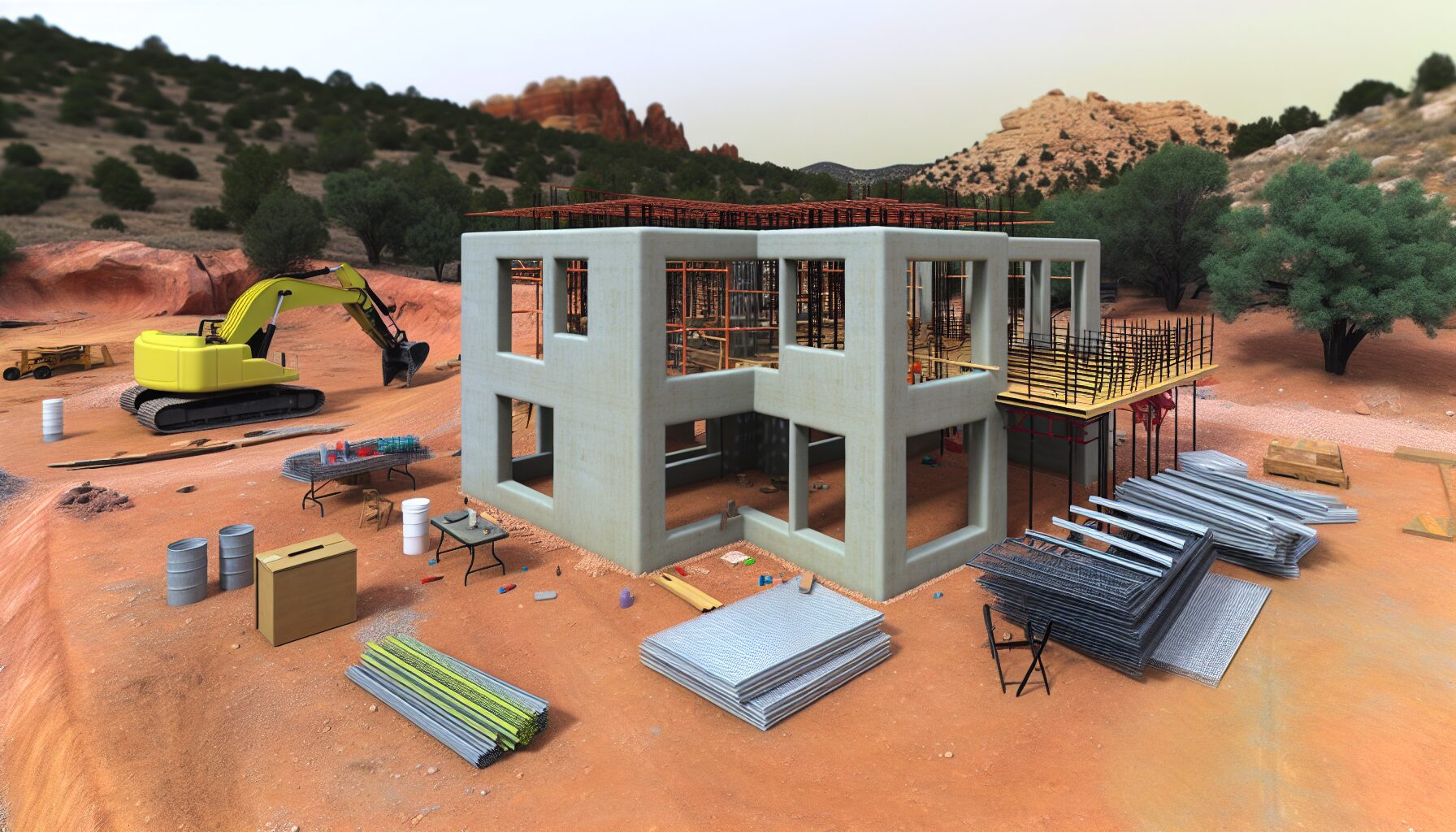
The Chamisa Verde affordable housing initiative in Taos, New Mexico, is forging ahead, even as technical issues with its 3D printing equipment have caused delays. The project, which aims to use additive manufacturing to address the region’s housing shortage, is a pioneering effort in sustainable construction. Despite the setbacks, stakeholders remain optimistic about the future of 3D-printed housing in the area.
3D Printing in Construction: A Promising but Challenging Path
3D printing, or additive manufacturing, has been hailed as a game-changer in the construction industry. By layering material—typically concrete or a composite—according to a digital model, builders can create structures faster, with less waste, and often at a lower cost. The Chamisa Verde project, spearheaded by the Taos-based nonprofit Innovative Housing Solutions (IHS), is one of the first in New Mexico to attempt this method for affordable housing.
However, the technology is still maturing. The 3D printer used for the project, manufactured by a company based in Texas, has experienced multiple mechanical issues since its arrival in Taos. These include problems with the extruder and software glitches that have delayed the printing of the first home. Despite these hurdles, IHS remains committed to the project’s long-term vision.
Affordable Housing Meets Additive Manufacturing
Chamisa Verde is more than just a technological experiment—it’s a response to a critical housing crisis in Taos County. The region faces a severe shortage of affordable homes, with many residents priced out of the market. By using 3D printing, IHS hopes to reduce construction costs and timelines, making homeownership more accessible to low- and middle-income families.
The project plans to build 28 homes in total, with the first few serving as prototypes to refine the printing process. Once the printer is fully operational, the team expects to complete a home in as little as two weeks. The homes are designed to be energy-efficient and resilient, incorporating passive solar design and sustainable materials.
Technical Setbacks and Community Support
While the delays have been frustrating, they have also provided valuable learning opportunities. IHS has worked closely with the printer manufacturer to troubleshoot issues and improve the machine’s reliability. The organization has also received strong support from the local community and government, which see the project as a potential model for other rural areas facing similar housing challenges.
In the meantime, IHS is using the downtime to train local workers in 3D printing technology, ensuring that the community benefits from job creation and skill development. This aligns with the broader mission of the project: to create not just homes, but a sustainable, self-sufficient community.
The Future of 3D-Printed Housing in Taos
Despite the initial setbacks, the Chamisa Verde project remains a beacon of innovation. As the technology matures and the team gains more experience, the potential for scaling up becomes more realistic. IHS envisions a future where 3D-printed homes are a common solution to housing shortages across the Southwest and beyond.
For now, the focus remains on getting the printer fully functional and completing the first home. Once that milestone is reached, the pace of construction is expected to accelerate significantly. With continued community support and technical refinement, Chamisa Verde could become a landmark in the evolution of additive manufacturing in construction.
Source: The Taos News

