

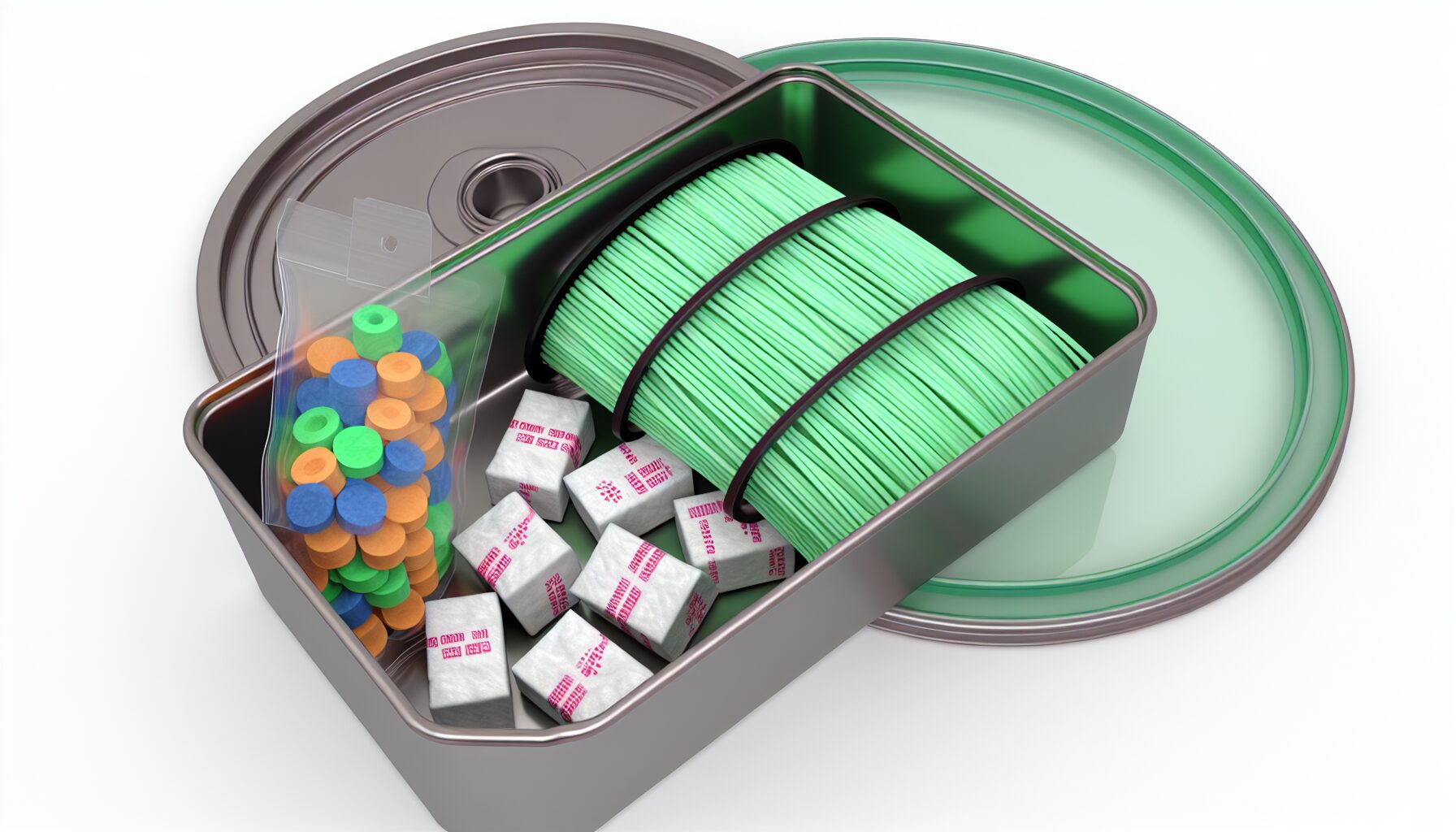
3D printing enthusiasts often overlook the importance of proper filament storage, which can significantly impact print quality. Ensuring your filament is stored correctly can prevent common issues like moisture absorption and degradation.
Understanding 3D Printer Filament
3D printer filament is the material used to create objects in additive manufacturing. It comes in various types, such as PLA, ABS, and PETG, each with unique properties. However, all filaments share a common vulnerability: they can absorb moisture from the air, leading to poor print quality.
The Impact of Moisture on Filament
When filament absorbs moisture, it can cause a range of printing problems. The presence of water can lead to steam formation during printing, resulting in bubbles, stringing, and weak layer adhesion. This not only affects the aesthetic quality of the print but also its structural integrity.
Effective Filament Storage Solutions
To prevent moisture absorption, it’s crucial to store filament in a dry environment. Airtight containers with desiccant packs are a popular choice among 3D printing enthusiasts. Vacuum-sealed bags are another effective option, as they remove air and moisture from the storage environment.
Additional Tips for Filament Care
Beyond storage, regularly checking the condition of your filament is essential. Look for signs of brittleness or discoloration, which may indicate moisture damage. Additionally, consider investing in a filament dryer to restore any compromised material.
By implementing these storage and care strategies, you can ensure your 3D printer filament remains in optimal condition, leading to better print results and a more satisfying 3D printing experience.
Source: How-To Geek

