

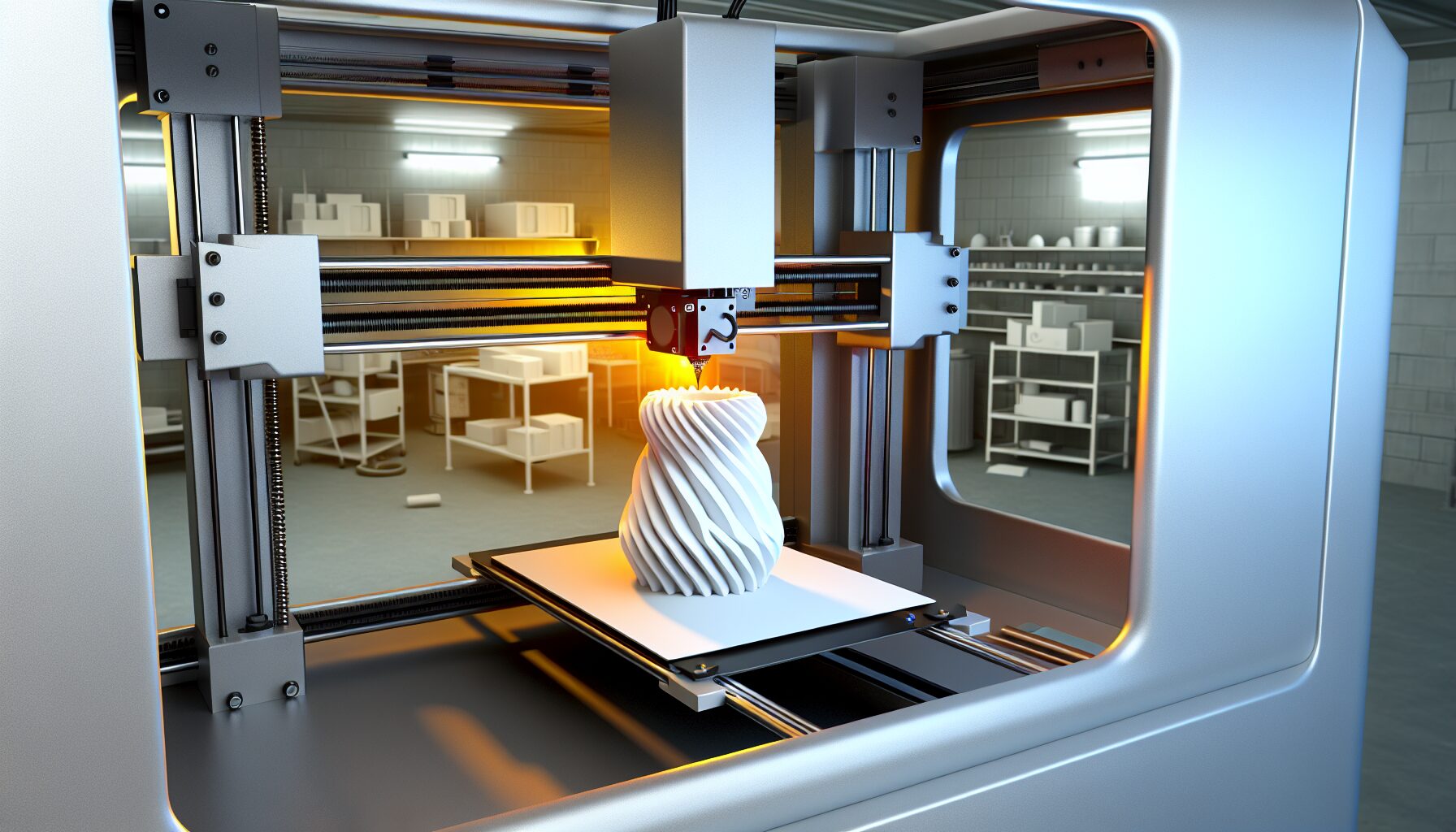
3D printing, also known as additive manufacturing, is revolutionizing the way we create and manufacture products. By transforming digital designs into physical objects, this technology is opening up new possibilities across various industries.
Understanding 3D Printing Technology
At its core, 3D printing involves creating a three-dimensional object from a digital file. The process begins with a digital model, which is sliced into thin layers. These layers are then printed one on top of the other to form the final object. This layer-by-layer approach allows for intricate designs and complex geometries that traditional manufacturing methods cannot achieve.
Applications of 3D Printing
3D printing is being utilized in a wide range of fields, from healthcare to aerospace. In the medical industry, it is used to create custom prosthetics and implants, tailored to fit individual patients perfectly. In aerospace, 3D printing is used to produce lightweight components that reduce fuel consumption and increase efficiency. The technology is also making waves in the fashion industry, where designers are using it to create unique, customizable clothing and accessories.
Benefits of 3D Printing
One of the main advantages of 3D printing is its ability to produce complex designs with minimal waste. Traditional manufacturing methods often involve cutting away excess material, leading to significant waste. In contrast, 3D printing only uses the material necessary to build the object, making it a more sustainable option. Additionally, 3D printing allows for rapid prototyping, enabling designers to quickly test and refine their ideas before moving to mass production.
The Future of 3D Printing
As 3D printing technology continues to evolve, its potential applications are expanding. Researchers are exploring the use of 3D printing in construction, where it could be used to build entire houses quickly and efficiently. In the food industry, 3D printers are being developed to create customized meals, tailored to individual dietary needs. The possibilities are endless, and as the technology becomes more accessible, we can expect to see even more innovative uses in the future.
Source: Hackaday

