

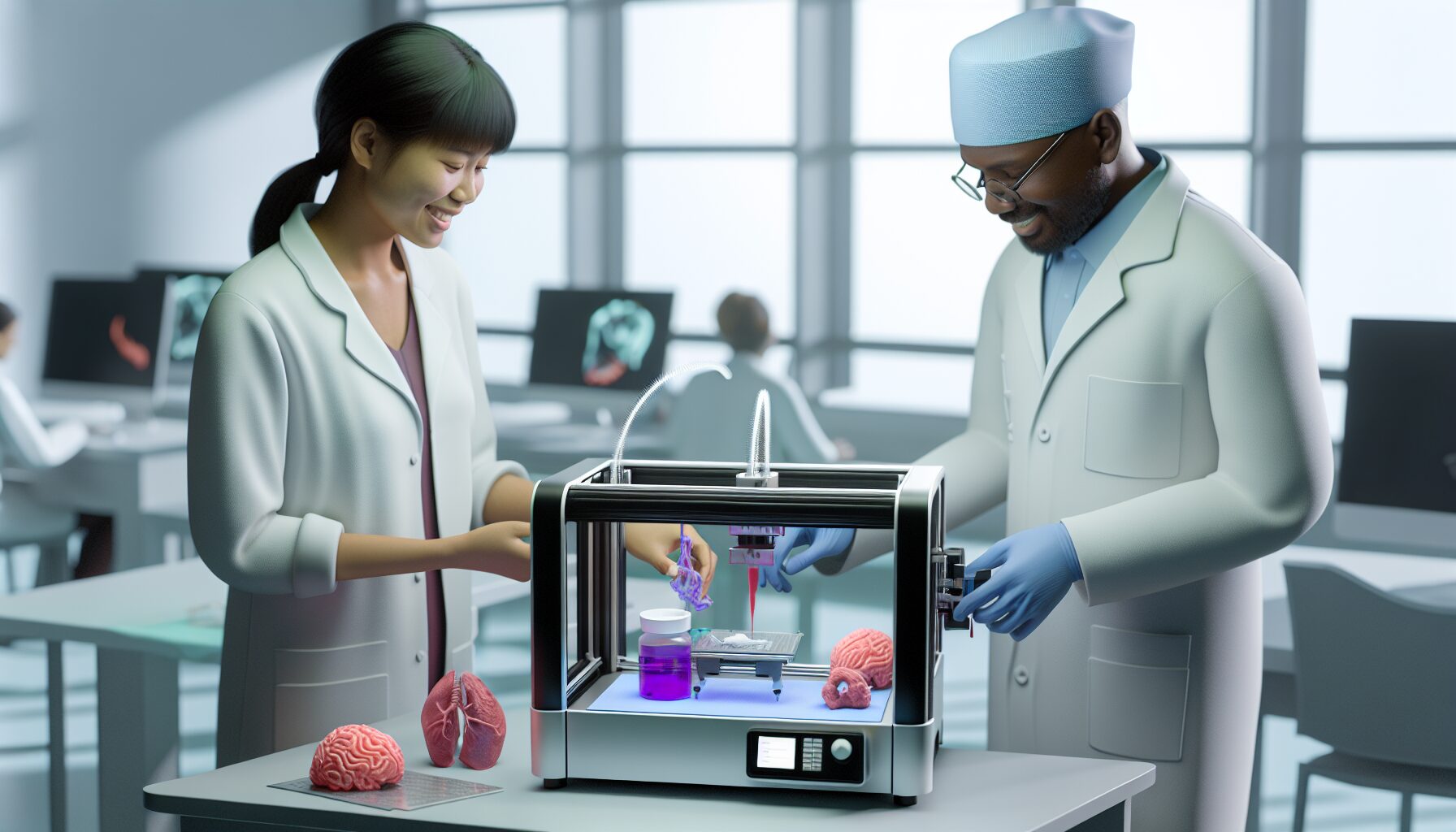
In a major leap forward for regenerative medicine, UT Southwestern Medical Center has been awarded a $25 million federal grant to spearhead a national initiative focused on 3D printing human organs. This ambitious project aims to revolutionize organ transplantation and address the critical shortage of donor organs in the United States.
UT Southwestern Leads National 3D Bioprinting Consortium
The funding, provided by the Advanced Research Projects Agency for Health (ARPA-H), positions UT Southwestern as the lead institution in a multi-organization consortium. The initiative, known as the Dallas Hybrid Organ Printing System (D-HOPS), brings together experts in bioengineering, regenerative medicine, and 3D printing to develop functional, transplantable human organs using advanced bioprinting technologies.
Dr. Daniel Siegwart, Associate Professor in the Department of Biomedical Engineering at UT Southwestern, will serve as the principal investigator. The project will focus on developing a hybrid system that combines synthetic and biological materials to create organs that mimic the structure and function of natural human tissues.
How 3D Bioprinting Could Transform Organ Transplants
Organ shortages remain a persistent challenge in healthcare, with over 100,000 people in the U.S. currently on transplant waiting lists. Traditional organ donation cannot meet this demand, and many patients die before receiving a suitable organ. 3D bioprinting offers a promising solution by enabling the fabrication of organs on demand, tailored to individual patients using their own cells to reduce the risk of rejection.
The D-HOPS project aims to overcome key technical hurdles in bioprinting, such as vascularization (creating blood vessel networks within printed tissues) and ensuring long-term functionality of printed organs. The team will use a combination of bioinks, stem cells, and advanced printing techniques to replicate the complex architecture of organs like kidneys and livers.
Collaborative Innovation in Additive Manufacturing
UT Southwestern will collaborate with several leading institutions and companies in the field of additive manufacturing and regenerative medicine. These include the University of Texas at Austin, Georgia Tech, and 3D Systems, a pioneer in 3D printing technology. Each partner brings unique expertise, from materials science to computational modeling, to accelerate the development of viable organ printing systems.
The project also aligns with ARPA-H’s mission to support high-risk, high-reward research that can lead to transformative breakthroughs in health. By investing in cutting-edge bioprinting technologies, the agency hopes to lay the groundwork for a future where organ failure is no longer a life-threatening condition.
Looking Ahead: The Future of 3D-Printed Organs
While fully functional 3D-printed organs are still in the research phase, the D-HOPS initiative represents a significant step toward making this vision a reality. If successful, the project could pave the way for clinical trials and eventual FDA approval of bioprinted organs for transplantation.
Beyond transplants, the technology could also be used to create organ models for drug testing, reducing the need for animal testing and improving the accuracy of preclinical studies. The implications for personalized medicine, tissue repair, and disease modeling are vast.
As UT Southwestern and its partners embark on this groundbreaking journey, the world will be watching closely. The success of D-HOPS could redefine the future of medicine and offer hope to millions of patients awaiting life-saving transplants.
Source: D Magazine

