

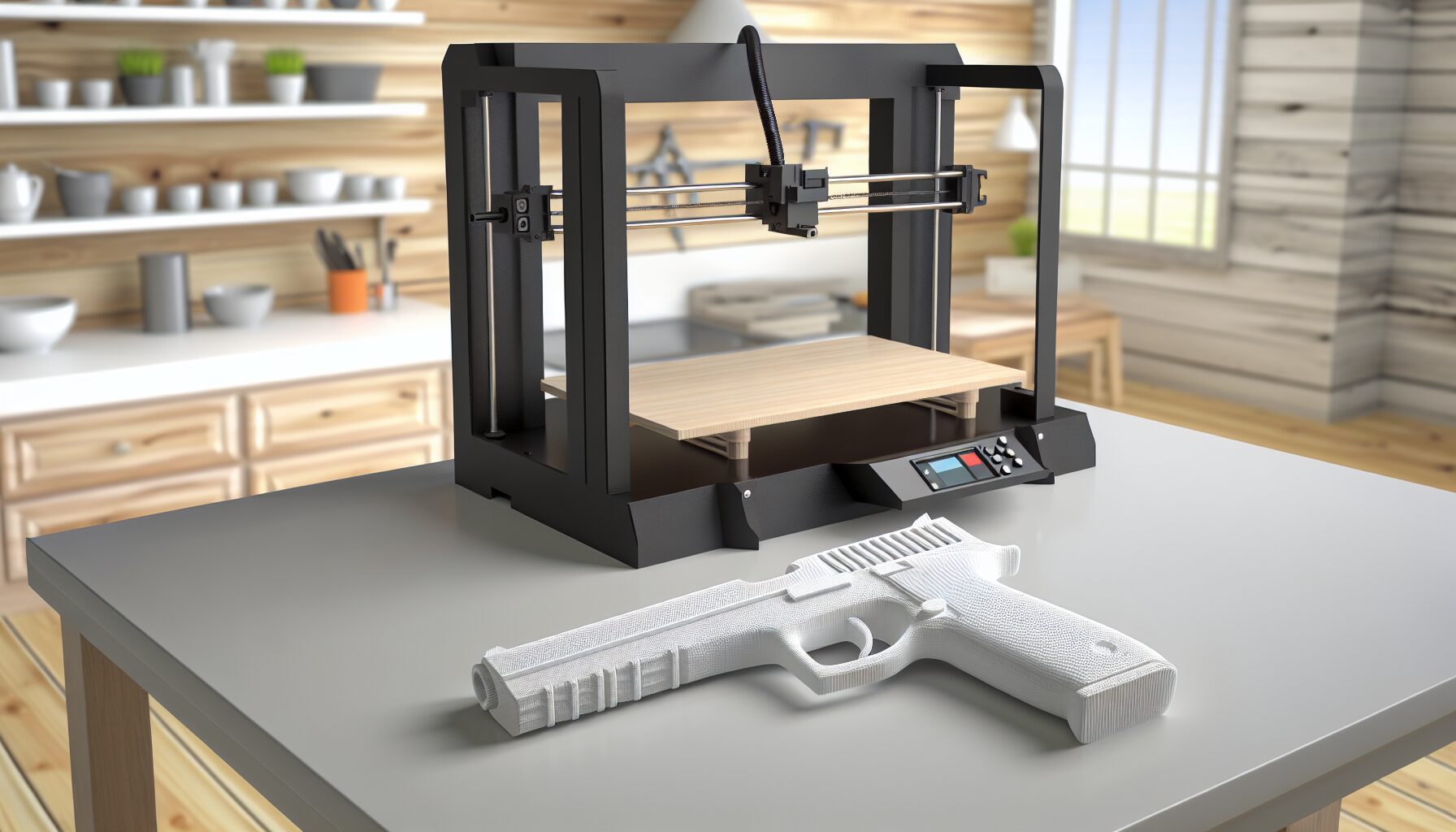
In a bold move to address the growing threat of untraceable firearms, New York State has announced a first-of-its-kind initiative aimed at curbing the distribution and production of 3D printed guns. This comprehensive plan combines legislative action with digital enforcement, setting a new precedent in the fight against so-called ‘ghost guns.’
New York’s Strategy Against 3D Printed Firearms
Governor Kathy Hochul revealed the initiative during a press conference in Albany, emphasizing the urgent need to regulate the digital files used to produce 3D printed guns. These weapons, often made from plastic and lacking serial numbers, are nearly impossible to trace and can be manufactured at home using consumer-grade 3D printers.
Under the new plan, New York will work with cybersecurity experts and law enforcement to identify and block online distribution of CAD (computer-aided design) files that enable the printing of firearms. The state will also introduce legislation that criminalizes the sharing or possession of such files without proper authorization.
Understanding the Threat of 3D Printed Guns
3D printed guns, also known as ghost guns, have become a growing concern for law enforcement agencies across the United States. These weapons can be produced using widely available 3D printers and materials, bypassing traditional gun control measures. Because they are not registered and lack serial numbers, they are difficult to trace when used in crimes.
The first 3D printed gun, known as the “Liberator,” was released online in 2013 by Defense Distributed, sparking a national debate over the legality and safety of such weapons. Since then, the technology has advanced, and the files have proliferated across the internet, often hosted on decentralized platforms that are difficult to regulate.
Legislative and Technological Measures
New York’s plan includes a multi-pronged approach:
- Legislation: A new bill will make it illegal to share, download, or possess digital blueprints for 3D printed guns without a license. Violators could face criminal charges.
- Digital Monitoring: The state will collaborate with cybersecurity firms to monitor the internet for illegal distribution of gun-printing files, using AI and machine learning to detect and block them.
- Public Awareness: Educational campaigns will inform the public about the dangers of ghost guns and the legal consequences of producing or possessing them.
Governor Hochul stated, “We are taking a stand against the digital spread of deadly weapons. New York will not allow our communities to be endangered by untraceable, undetectable firearms.”
Implications for the 3D Printing Industry
While the initiative targets illegal firearm production, it also raises questions for the broader 3D printing community. Many in the industry worry about potential overreach and the impact on innovation. However, state officials have clarified that the legislation is narrowly focused on firearm-related files and will not affect legitimate uses of 3D printing technology.
Industry experts have long advocated for responsible use of 3D printing, and many support efforts to prevent the misuse of the technology. Organizations such as the Additive Manufacturing Coalition have called for clear guidelines that balance innovation with public safety.
National and Global Context
New York’s move comes amid a broader national conversation about ghost guns. The Biden administration has also taken steps to regulate these weapons, including a rule requiring that ghost gun kits be treated like traditional firearms, with serial numbers and background checks.
Internationally, countries like Australia, the UK, and Germany have already implemented strict regulations on 3D printed firearms. New York’s initiative could serve as a model for other U.S. states looking to address the issue.
Looking Ahead
As 3D printing technology continues to evolve, so too will the challenges associated with its misuse. New York’s proactive approach represents a significant step toward ensuring that innovation does not come at the cost of public safety. By combining legislative action with digital enforcement, the state is setting a new standard in the regulation of digital weapons.
Whether other states will follow suit remains to be seen, but one thing is clear: the era of unregulated 3D printed firearms may be coming to an end.
Source: 3D Printing Industry

