

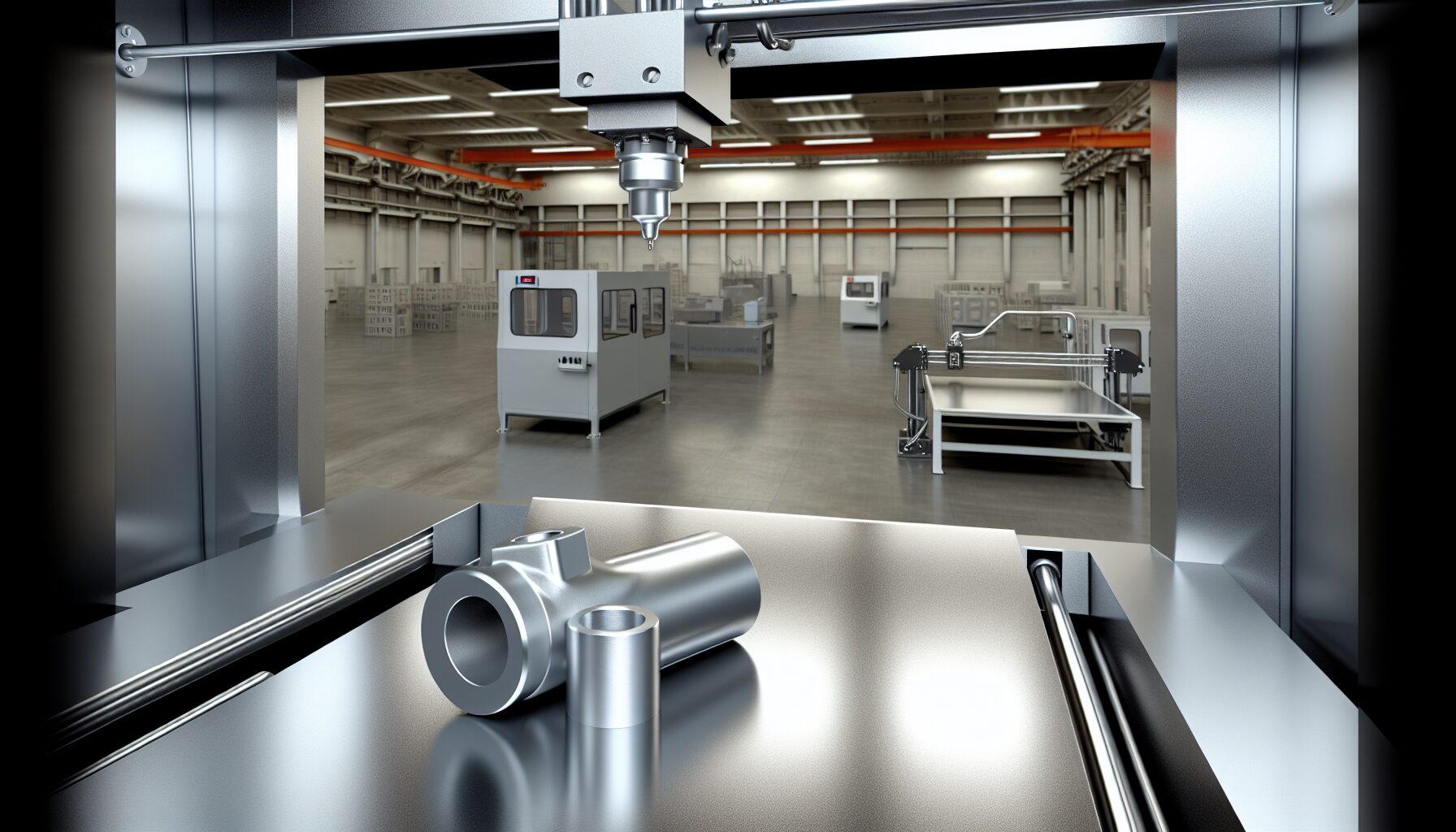
Metal additive manufacturing (AM) is poised for a significant leap forward. As we look ahead to 2026, industry experts forecast a shift from niche prototyping to full-scale industrial production. This evolution is driven by technological advancements, increased investment, and growing demand across sectors like aerospace, automotive, and energy.
Metal 3D Printing: From Prototyping to Production
Historically, metal 3D printing has been used primarily for prototyping and low-volume production due to high costs and limited throughput. However, recent developments in hardware, software, and materials are changing that narrative. By 2026, analysts expect metal AM to become a viable option for mass production, particularly in high-value industries.
One of the key drivers is the maturation of powder bed fusion (PBF) and binder jetting technologies. These methods are becoming faster, more reliable, and more cost-effective. Companies like GE Additive, HP, and Desktop Metal are investing heavily in scaling up their platforms to meet industrial demands.
Key Trends Shaping Metal Additive Manufacturing
Several trends are converging to accelerate the adoption of metal AM in industrial settings:
- Automation and Workflow Integration: End-to-end automation—from design to post-processing—is reducing labor costs and improving consistency.
- Material Innovation: New metal alloys tailored for AM are expanding the range of applications, especially in aerospace and medical sectors.
- Quality Assurance: In-situ monitoring and AI-driven analytics are enhancing part reliability and certification processes.
- Cost Reduction: Economies of scale and improved machine efficiency are driving down the cost per part.
These advancements are making it feasible to produce complex, high-performance parts at scale—something that was previously out of reach for most manufacturers.
Applications Across Industries
By 2026, metal AM is expected to play a critical role in several key industries:
- Aerospace: Lightweight, complex components with reduced lead times and material waste.
- Automotive: Custom tooling, lightweight structural parts, and performance components for electric vehicles.
- Energy: Turbine components and heat exchangers with optimized geometries for improved efficiency.
- Medical: Patient-specific implants and surgical tools with enhanced biocompatibility.
These sectors are already investing in AM infrastructure and talent, setting the stage for broader adoption in the coming years.
Challenges and Outlook
Despite the optimism, several challenges remain. Certification and standardization are still evolving, particularly for safety-critical applications. Additionally, the high initial investment in AM equipment and training can be a barrier for small and medium-sized enterprises.
Nevertheless, the outlook is promising. As the technology matures and the ecosystem becomes more robust, metal AM is expected to become a cornerstone of modern manufacturing. By 2026, we may well see a world where 3D-printed metal parts are not the exception, but the norm.
Source: 3DPrint.com

