

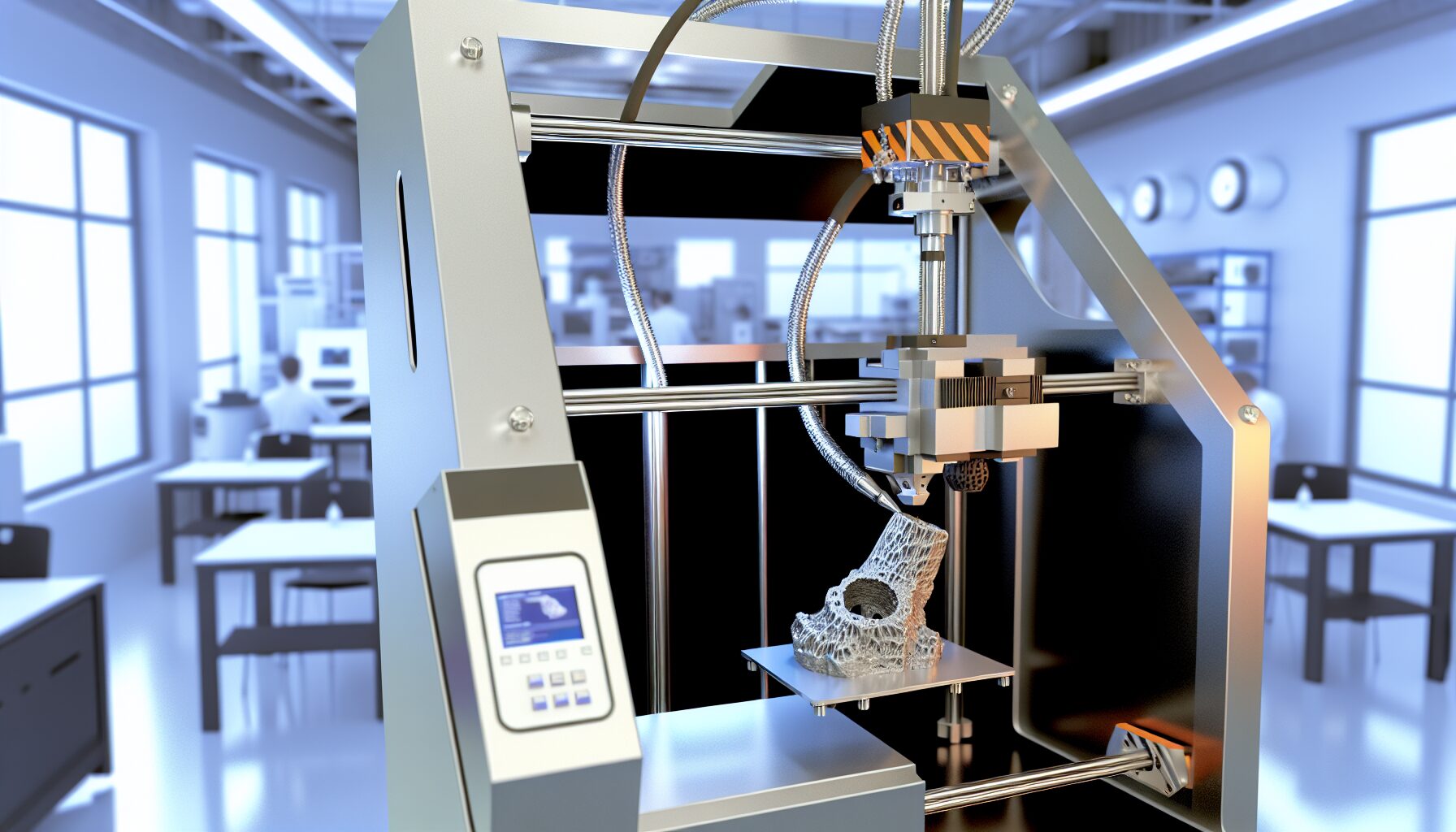
June 2023 marked a significant turning point in the 3D printing industry, with a wave of acquisitions, product launches, and strategic shifts that are shaping the future of additive manufacturing. From major corporate moves to innovative new technologies, here’s a comprehensive look at the most important developments from the month.
Major Acquisitions Reshape the 3D Printing Landscape
One of the most talked-about events in June was the announcement that Stratasys had entered into a definitive agreement to merge with Desktop Metal. The all-stock transaction, valued at approximately $1.8 billion, aimed to create a combined company with a broad portfolio of polymer and metal 3D printing technologies. The merger was positioned as a strategic move to accelerate the adoption of additive manufacturing across industries by offering end-to-end solutions.
However, the merger faced competition from 3D Systems, which submitted a rival bid to acquire Stratasys. This sparked a bidding war that highlighted the growing consolidation trend in the industry. The outcome of these negotiations could significantly influence the competitive dynamics of the additive manufacturing sector.
New Product Launches and Innovations
June also saw several exciting product announcements. Nexa3D launched the XiP Pro, a high-speed resin 3D printer designed for industrial applications. The XiP Pro features a large build volume and utilizes Nexa3D’s proprietary Lubricant Sublayer Photo-curing (LSPc) technology, enabling rapid production of high-resolution parts.
Meanwhile, Formlabs introduced the Form 4 and Form 4B, the next generation of its popular SLA printers. These machines offer faster print speeds, improved reliability, and a new Low Force Display (LFD) print engine. The Form 4B is tailored for dental and medical applications, reflecting the growing demand for healthcare-specific 3D printing solutions.
In the metal printing space, Meltio announced the Meltio M600, a new wire-laser metal 3D printer designed for industrial-scale production. The M600 supports a wide range of materials and is compatible with robotic integration, making it suitable for large-format and automated manufacturing environments.
Industry Trends and Strategic Shifts
Beyond product launches and mergers, June also highlighted several key trends in the 3D printing industry. Sustainability continued to be a major focus, with companies exploring ways to reduce waste and improve the recyclability of printed parts. For example, Replique, a digital inventory platform, partnered with BASF Forward AM to offer sustainable materials for on-demand production.
Another notable trend was the increasing integration of AI and machine learning into 3D printing workflows. Companies like Oqton are developing software platforms that use AI to optimize print parameters, predict failures, and streamline production planning. This reflects a broader shift toward smarter, more automated manufacturing processes.
Additionally, the medical and dental sectors continued to embrace 3D printing. From custom implants to surgical guides, additive manufacturing is proving to be a valuable tool for personalized healthcare. Regulatory bodies are also beginning to adapt, with the FDA issuing new guidance on the use of 3D printing in medical device production.
Looking Ahead: What’s Next for Additive Manufacturing?
As we move into the second half of 2023, the 3D printing industry is poised for continued growth and transformation. The outcome of the Stratasys merger saga will likely set the tone for future consolidation, while ongoing innovations in materials, hardware, and software will expand the capabilities of additive manufacturing.
With increasing adoption across aerospace, automotive, healthcare, and consumer goods, 3D printing is no longer a niche technology—it’s becoming a mainstream manufacturing solution. Companies that can offer scalable, reliable, and sustainable solutions will be best positioned to lead in this evolving landscape.
Source: 3D Printing Industry

