

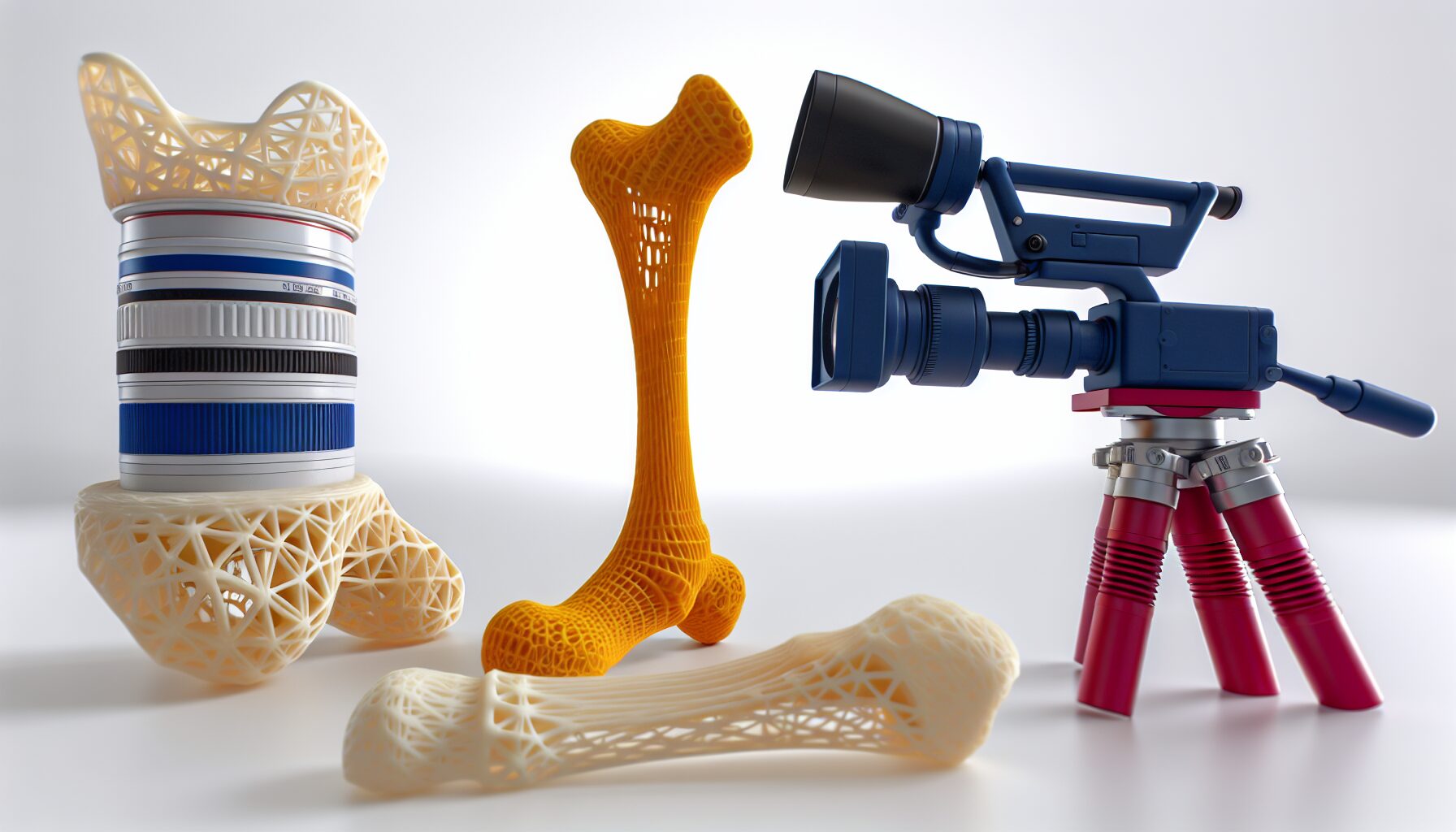
Scientists have taken a major step forward in the development of artificial bone by using 3D printing to create scaffolds that closely mimic the structure and function of natural bone. This innovation could pave the way for more effective bone implants and regenerative treatments in the near future.
3D Printing in Bone Tissue Engineering
Bone tissue engineering has long sought to replicate the complex architecture of human bone. Traditional methods often fall short in mimicking the intricate porous structure and mechanical strength required for successful integration with the body. However, 3D printing—particularly additive manufacturing techniques—has emerged as a powerful tool to overcome these limitations.
In a recent study published in Advanced Science, researchers developed a novel 3D printed scaffold using a combination of biocompatible materials and advanced printing techniques. These scaffolds are designed to support cell growth, promote vascularization, and eventually degrade as natural bone regenerates in its place.
Material Innovation and Scaffold Design
The team used a composite material that includes calcium phosphate, a key component of natural bone, combined with biodegradable polymers. This combination not only provides the necessary mechanical strength but also supports osteoconductivity—the ability to support new bone growth.
What sets this research apart is the precision of the scaffold’s microarchitecture. Using high-resolution 3D printing, the researchers were able to create a porous structure that closely resembles the trabecular (spongy) bone found inside the human body. This structure is crucial for nutrient flow and cell migration, both essential for successful bone regeneration.
Biological Performance and Clinical Potential
In preclinical tests, the 3D printed scaffolds demonstrated excellent biocompatibility and promoted the growth of bone-forming cells. The scaffolds also showed promising results in supporting vascularization, a critical factor for the long-term success of bone implants.
These findings suggest that 3D printed scaffolds could be used in a variety of clinical applications, from repairing bone defects caused by trauma or disease to serving as a platform for drug delivery or stem cell therapy. The ability to customize the scaffold’s shape and composition for individual patients further enhances its clinical potential.
Future Outlook for 3D Printed Bone Implants
While more research is needed before these scaffolds can be widely used in clinical settings, the progress made in this study marks a significant milestone. The integration of advanced materials, precise 3D printing, and biological functionality brings us closer to the goal of fully functional artificial bone.
As 3D printing technology continues to evolve, we can expect even more sophisticated solutions for bone regeneration and other medical applications. This innovation not only holds promise for improving patient outcomes but also for reducing the cost and complexity of bone repair procedures.
Source: Advanced Science News

