

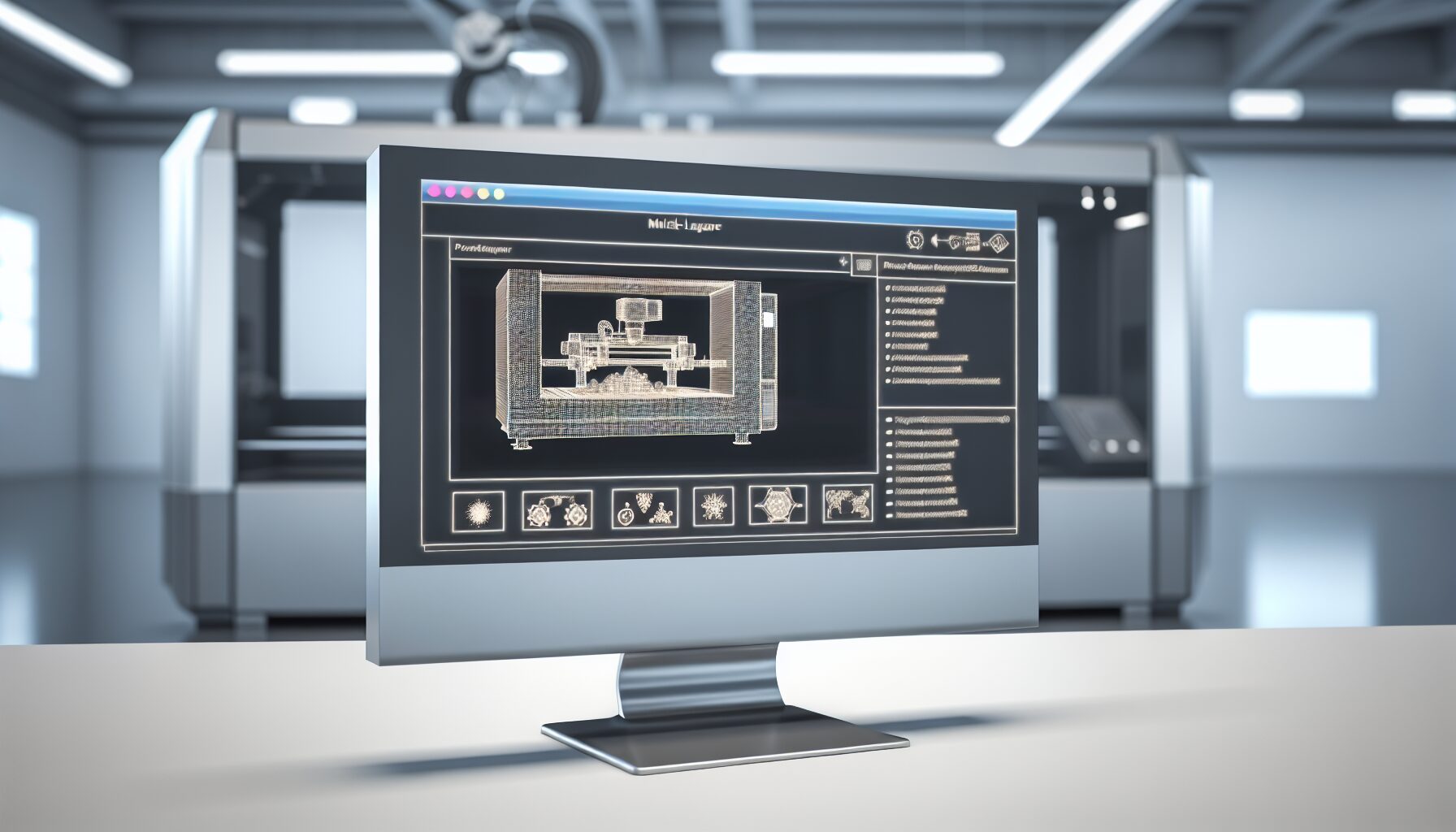
Nikon has taken a significant step forward in the additive manufacturing space with the release of its new software designed to optimize multi-laser metal 3D printing. This innovation aims to address long-standing challenges in the industry, such as laser interference and inconsistent part quality, by offering a smarter, more efficient approach to managing multiple lasers during the printing process.
Enhancing Multi-Laser Metal 3D Printing
Multi-laser systems have become increasingly popular in metal additive manufacturing due to their ability to significantly reduce build times. However, coordinating multiple lasers simultaneously introduces complexities, including thermal distortion, laser overlap, and inconsistent material properties. Nikon’s new software directly tackles these issues by intelligently managing laser paths and interactions.
The software uses advanced algorithms to optimize the coordination of multiple lasers, ensuring they work in harmony rather than in conflict. This results in improved part accuracy, reduced residual stress, and more consistent mechanical properties across the build. By minimizing the risk of laser interference, the software also helps extend the lifespan of the machine and reduce maintenance needs.
Key Features and Technical Capabilities
According to Nikon, the software integrates seamlessly with existing metal 3D printers and supports a wide range of materials and geometries. Key features include:
- Dynamic Laser Path Optimization: Adjusts laser paths in real-time to avoid overlap and thermal buildup.
- Thermal Simulation Integration: Predicts heat distribution to prevent warping and ensure dimensional accuracy.
- Scalability: Supports systems with two or more lasers, making it suitable for both mid-range and high-end industrial printers.
- User-Friendly Interface: Offers intuitive controls and visualization tools for operators and engineers.
These capabilities are particularly valuable for industries such as aerospace, automotive, and medical, where part integrity and repeatability are critical. By improving the reliability of multi-laser printing, Nikon’s software could help accelerate the adoption of metal additive manufacturing in these sectors.
Background: Nikon’s Additive Manufacturing Strategy
Nikon’s entry into the additive manufacturing market has been strategic and deliberate. In recent years, the company has made several acquisitions and partnerships to strengthen its position in the 3D printing ecosystem. Notably, Nikon acquired SLM Solutions, a leading provider of metal 3D printing systems, in 2022. This move gave Nikon access to cutting-edge laser powder bed fusion (LPBF) technology and a strong customer base in industrial manufacturing.
The new software is a direct result of this expanded expertise. By combining Nikon’s legacy in precision optics and imaging with SLM’s experience in metal AM, the company is well-positioned to deliver high-performance solutions tailored to the needs of modern manufacturers.
Applications and Industry Impact
The introduction of this software could have a wide-reaching impact across several industries. In aerospace, for example, the ability to produce lightweight, high-strength components with consistent quality is essential. Multi-laser systems, when properly managed, can meet these demands while reducing production time and cost.
In the medical field, where custom implants and surgical tools require exacting standards, Nikon’s software can help ensure that every part meets strict regulatory requirements. Similarly, in the automotive sector, the technology can be used to produce complex parts with reduced lead times, supporting rapid prototyping and small-batch production.
As additive manufacturing continues to evolve, software will play an increasingly important role in unlocking the full potential of hardware. Nikon’s latest offering is a clear example of how intelligent software can enhance machine performance, improve part quality, and drive broader adoption of 3D printing technologies.
Source: 3D Printing Industry

