
JEOL Launches Electron Beam Metal 3D Printer for Tungsten
JEOL unveils its JAM-5200EBMPlus electron beam 3D printer for tungsten, offering new scanning modes and in-situ defect monitoring for advanced metal parts.
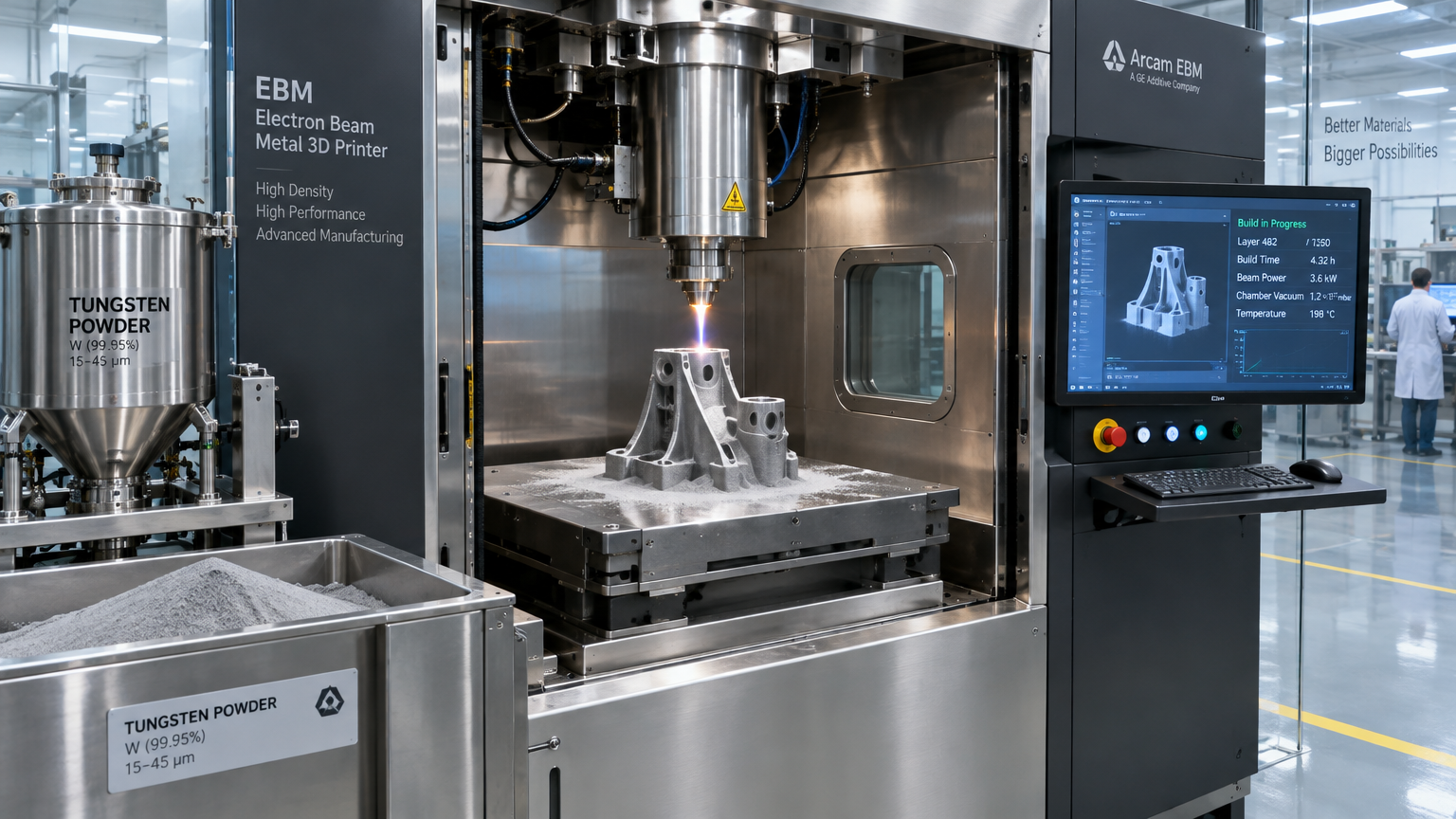
JEOL, a longstanding name in the field of scientific instrumentation, has announced the release of its latest metal additive manufacturing system, the JAM-5200EBMPlus. This new machine stands out for its ability to print with tungsten and other challenging metals using electron beam melting (EBM) technology. According to 3D Printing Industry, the printer features four interchangeable build units for different metals and build sizes, and debuts a Multi-Dot Scanning mode for improved process control. It also offers an optional backscattered electron (BSE) monitoring system, which can capture images of every printed layer to detect defects before the build completes.
This launch is noteworthy for both the choice of process—electron beam melting, which is less common than laser-based powder bed fusion—and the focus on tungsten, a notoriously difficult metal to process. Tungsten’s high melting point and density make it valuable for demanding applications, but also pose significant challenges for additive manufacturing.
Key points
- JEOL’s JAM-5200EBMPlus uses electron beam melting to print metals including tungsten
- Multi-Dot Scanning mode and BSE monitoring system offer advanced quality control
- Four build units allow for flexibility in material and part size
- The printer targets industrial markets where high-performance metals are required
What is electron beam melting and why does it matter?
Electron beam melting (EBM) is a powder bed process that uses a focused beam of electrons, rather than a laser, to selectively melt metal powder inside a vacuum chamber. This approach brings several advantages for certain metals: the vacuum environment prevents oxidation, and the high energy density of the electron beam can efficiently melt materials with very high melting points, such as tungsten and titanium alloys.
For users in aerospace, medical, and energy sectors, the ability to process these metals opens up applications that are difficult or impossible with more common materials like aluminium or steel. Tungsten, in particular, is valued for its exceptional density, hardness, and resistance to heat—qualities that are exploited in radiation shielding, electrical contacts, and components that must endure extreme temperatures.
However, tungsten is notoriously tricky to work with. Its high melting point (over 3400°C) and tendency to oxidise make conventional fabrication and even laser-based additive manufacturing challenging. Electron beam systems, such as the new JEOL printer, can address these problems by combining a vacuum environment with sufficient power to fully melt tungsten powder.
How does JEOL’s new printer compare to existing metal 3D printers?
Most metal 3D printers on the market use laser powder bed fusion (LPBF), where a laser selectively fuses layers of metal powder. While LPBF works well for many alloys, it struggles with the highest-melting-point metals because the lasers are often not powerful enough, and the process environment may not prevent oxidation as effectively as a vacuum.
The JAM-5200EBMPlus, as reported by 3D Printing Industry, is designed to accommodate four different build units, allowing users to switch between materials and build volumes. The Multi-Dot Scanning mode is a new feature that could improve process control by optimising how the electron beam interacts with the powder bed, potentially leading to finer microstructures or reduced residual stress—though details will depend on JEOL’s implementation.
The optional BSE monitoring system is another notable addition. By imaging each layer as it is built, this system can potentially flag defects in real time, a capability that is still relatively rare in commercial printers. Early detection of defects could save considerable time and material costs, especially for large or expensive prints.
What does this mean for small workshops and home users?
While the JAM-5200EBMPlus is aimed squarely at industrial users, the technology behind it could eventually influence the broader 3D printing landscape. For now, electron beam systems are typically large, expensive, and require specialised infrastructure—including high-vacuum chambers and strict powder handling protocols. Tungsten powder itself is costly and can be hazardous to handle without proper equipment.
For most home and small workshop users, this technology is out of reach. However, the trend towards more advanced in-situ monitoring and flexible build units may eventually filter down to more accessible machines. The move towards process monitoring, like JEOL’s BSE system, reflects a wider industry shift towards ensuring print quality and reducing the risk of failed builds—something every maker or engineer can appreciate.
Anyone interested in the details of how slicer software and G-code generation work for metal additive manufacturing may find our guide to slicer software helpful in understanding the basics, though electron beam systems use highly specialised toolpaths and parameters.
What remains to be seen?
While JEOL’s announcement highlights important technical advances, several practical questions remain. The actual cost of the JAM-5200EBMPlus is not stated in the sources, and EBM systems have traditionally been at the high end of the price spectrum. The effectiveness of the Multi-Dot Scanning mode in reducing defects or improving part properties will depend on user experience and further technical disclosures. Similarly, the value of the BSE monitoring system will become clearer as more data accumulates from real-world builds.
It is also unclear how easily users can switch between materials and whether the system is optimised for alloys other than tungsten. For industries requiring high-performance metal parts, these features are promising, but broader adoption may depend on cost, reliability, and the availability of suitable metal powders.