
Bambu Lab Enters 3D Scanning With the S1 Scanner
Bambu Lab debuts the S1 3D scanner and announces free pro editing tools, marking its entry into the 3D scanning market for makers and engineers.
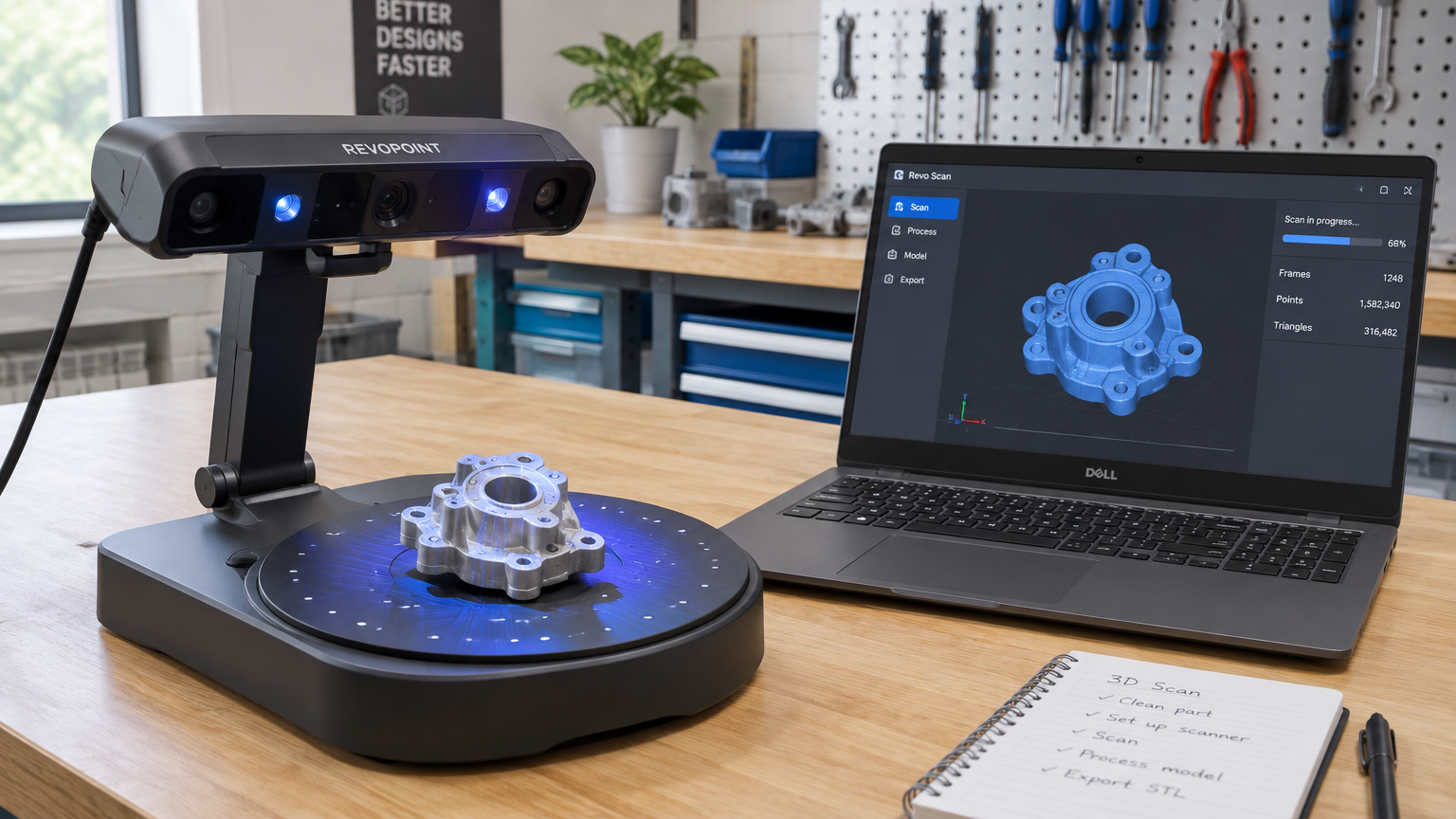
Bambu Lab has announced its entry into the 3D scanning market by launching the S1 3D scanner and introducing free professional editing tools. According to 3D Printing Industry, the S1 scanner is priced at $1,699 and is accompanied by software aimed at enhancing the scanning and editing process for users. The launch takes the company, best known for its 3D printers, into equipment for digitising real-world objects.
The news, reported on 28 November 2026, signals Bambu Lab’s intention to provide both hardware and software solutions for 3D scanning, targeting makers, engineers, and professionals interested in capturing and editing 3D models. The company is also offering pro-level editing tools at no additional cost, according to the source.
Key points
- Bambu Lab launches the S1 3D scanner, priced at $1,699 (3D Printing Industry).
- The company introduces free professional editing tools for scanned models.
- The headline describes this as Bambu Lab entering 3D scanning.
- The move targets makers, engineers, and professionals seeking integrated scanning and editing solutions.
How 3D scanning works
3D scanning is the process of capturing the shape and appearance of a physical object and converting it into a digital 3D model. Most desktop 3D scanners use techniques such as structured light, laser triangulation, or photogrammetry. The scanner projects patterns or light onto the object, records the way the patterns deform, and calculates the surface geometry. The resulting data is then processed into a mesh—a collection of vertices, edges, and faces that define the object’s shape.
Modern 3D scanners can capture high levels of detail and accuracy, making them suitable for applications in design, engineering, reverse engineering, and digital archiving. The S1’s specific scanning technology is not described in the available headlines, so it is not yet known whether it uses structured light, laser, or another method.
Why does Bambu Lab’s entry matter?
Bambu Lab is known for its 3D printers, which have been popular among hobbyists and professionals for their reliability and features. By entering the 3D scanning market, Bambu Lab aims to offer a more complete workflow—allowing users to digitise objects and then reproduce or modify them with 3D printers.
The inclusion of free pro editing tools is notable. Editing scanned models often requires separate, sometimes expensive, software. By bundling editing tools at no extra cost, Bambu Lab lowers the barrier for users who want to clean up, modify, or prepare their scans for printing or digital use.
The $1,699 price point positions the S1 in the upper mid-range for desktop 3D scanners, suggesting a focus on quality and features suitable for advanced hobbyists, small businesses, or engineering teams. However, without detailed specifications or reviews, it is not yet clear how the S1 compares in accuracy, speed, or usability to existing scanners on the market.
What to watch next?
Bambu Lab’s move is likely to attract attention from both existing users and competitors. Key questions for potential buyers include:
- What scanning technology and resolution does the S1 offer?
- How do the free editing tools compare to established software solutions?
- Will Bambu Lab integrate the scanner and software with its existing 3D printers for a seamless workflow?
- How does the S1 perform with different object sizes, colours, and materials?
As Bambu Lab has only just announced the product, hands-on reviews, demonstrations, and technical details are not yet available. Interested users should look for further announcements, independent reviews, and comparisons to understand the S1’s capabilities and limitations.
With the growing popularity of 3D scanning for prototyping, repair, and digital archiving, Bambu Lab’s entry could make these workflows more accessible to a broader range of users.
Sources
This article was written with AI assistance, based on the sources listed above.