
Aerosint Developing Low Waste Multi-Material Powder Bed Technology
As we’ve previously covered, sintering and other powder bed technologies can be very wasteful. A Belgian start-up is looking to address this issue along with introducing a new multi-material technology. Aerosint revealed it’s plans to develop their new powder bed “SLS-like” technology at the recent
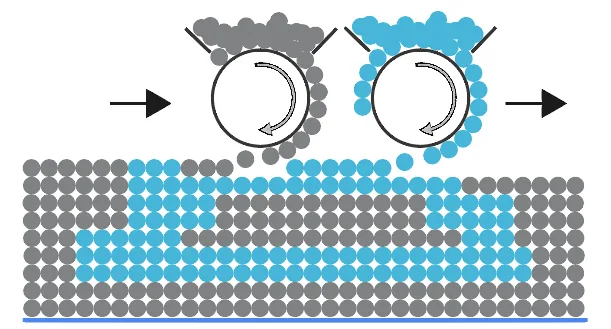
As we’ve previously covered, sintering and other powder bed technologies can be very wasteful. A Belgian start-up is looking to address this issue along with introducing a new multi-material technology. Aerosint revealed it’s plans to develop their new powder bed “SLS-like” technology at the recent TCT show. The new technology will enable the printing of high-performance polymers among many other materials.
This new method has no official name yet. The company simply refers to it as their dispensing technology. The capabilities that it touts are the most interesting aspect of it. Aside from the low wastage, it is also stunningly diverse in its material’s range. The company is looking to increase the amount and types of materials that it prints. Aerosint claim that it can process ceramics, metals and organics organics as well as the polymers they’ve tested.
Aerosint’s Process
The technology is not on the market and Aerosint have not shown off its full capabilities in public yet. So far, we have a bit of information to work off of. While the technology itself is new, it bears striking similarities to both SLS and multi-jet fusion. Particularly, it resembles HP’s multi jet considering how it deposits with voxel level control. The core difference, however, is the multi-material capabilities it has.
The company is finalising the prototype, basing it off of an industrial SLS printer from 1997. To create the prototype, the team retro-fitted this older design with their own patterning drums. Currently, they are working towards achieving uniform printing speeds, zero wastage through non-fusable support materials that are also recyclable and improved parts cleaning.
The company has printed at 1 – 500 micron resolution, working with PA-12 and TPU. They are hoping to introduce the printer with a speed of 2 second per layer with temperatures that can go up to 400 °C. The company is laying out a tall order but if they are successful it could be one of the most promising methods that the additive manufacturing industry has seen.
Written By: Daniel Faegnell Sources: Aerosint, Miles Scott